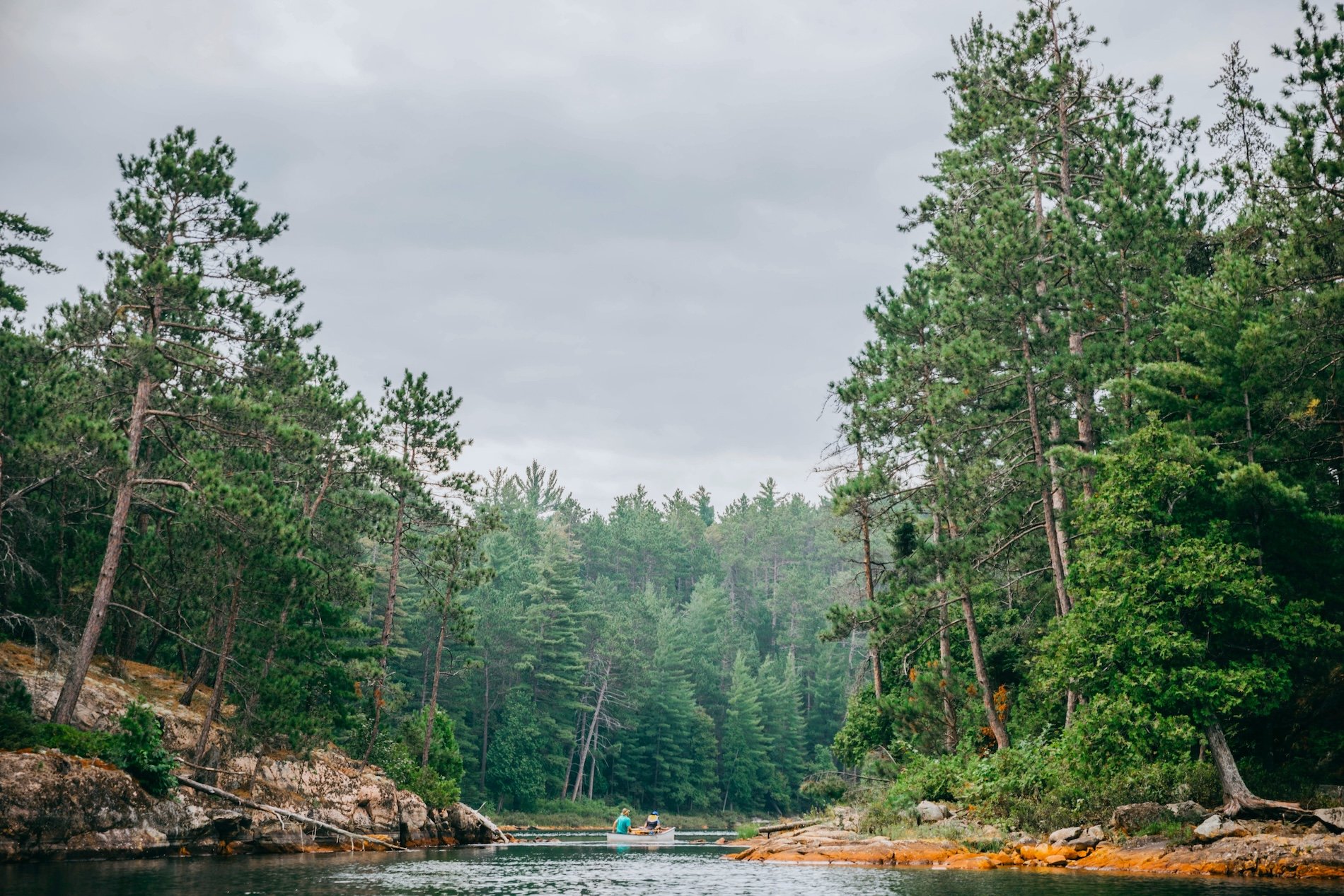

karibu guide, Laramie, showing off her portaging skills on our expertly guided tour of the Temagami Wilderness.
Canoeing in Northern Ontario’s wilderness is a deeply restorative, exhilarating experience that is much needed in today’s modern world. But while canoeing in Algonquin Provincial Park may be the first local canoe trip that comes to many minds, karibu founder Andrea Mandel-Campbell suggests a path less paddled. If you’re looking for an unparalleled Canadian Shield canoe trip with deep crystal lakes, amazing campsites and no crowds, you can’t beat Temagami.
It started with summer camps in Quebec and Manitoba, where I grew up, navigating adolescence as much as the deep, maze-like lakes, endless tree line and rock-sculpted shores. I always came home feeling a little different, a little older, like life’s aperture had widened.
In my 20s, I met my future husband on a ‘canoe date’ paddling the Canadian Shield outside Flin Flon in northern Manitoba. It became our ritual to canoe every weekend in the summer. And it was one of the things we missed most about Canada when we moved to Latin America for close to a decade. We quickly realized that canoeing the Shield — the greatest area of exposed Archean rock in the world — was something special, an iconic and uniquely Canadian experience you can’t find anywhere else.

Paddling the Chiniguchi Waterway, an unmanaged provincial park in the Temagami Wilderness region, .
On our return home, we were determined to reclaim our canoeing tradition and introduce it to our kids as a non-negotiable family value. We started with the provincial parks close to Toronto, including Algonquin, and as they grew, going on multi-day portaging trips further afield. Our kids are older now — 16 and 21 — and we still go every summer to our favourite spot: the Temagami Wilderness.
In our view, the Temagami is hands down the best place in Ontario to canoe and experience spectacular wilderness, while still being accessible.
A common destination for canoe trips in Ontario — Canoeing in Algonquin
Just 300 km north of Toronto and about 260 km west of Ottawa, it was made famous by the legendary group of artists called the “Group of Seven” or “Algonquin School.” Painters like A.Y. Jackson and Tom Thomson brought Algonquin and the Shield to life with their Post-Impressionist landscapes of rock-hewn shores and ethereal pine trees.
Canoe routes in Algonquin have some beautiful spots, no question, but the park also has some downsides. Backcountry enthusiasts argue it lacks some of the majesty of the bigger, bolder more northern Canadian Shield. It’s actually quite boggy and swampy in many parts, making it great for moose spotting but also ideal for bugs.
Its proximity to large urban centres also means a lot more people and difficulty finding a campground. Indeed, the campgrounds operate based on a reservation system, and when it opens, securing a spot is a bit like the Hunger Games.
Our recommendation for the best Ontario canoeing — Temagami
In contrast, the Temagami is just a little further north, and for a couple of hours of extra driving, you are rewarded with exquisite wilderness, towering old-growth forests, deep glassy lakes and virtually no people.
Located to the east of Sudbury, the closest city, and bordered by the town of Temagami to the west, the Temagami Wilderness is a vast area spanning 12,000 square km (4,600 square miles). Made up of 16 provincial parks and 26 conservation areas, many are unmanaged, which means there is very light provincial oversight and no way to reserve campsites.

The smooth sand beaches of McConnell Bay, where we begin our canoeing journey into the Temagami.
And the campsites are glorious. Maintained by a local non-profit, the Friends of Temagami, they can be found perched on rocky islands and outcroppings of smooth Canadian Shield, dotted with red and white pines, birch and cedar trees, or nestled along soft, sandy shores. With no one around, you feel as if you have all of nature to yourself as you wake to the mist rising off the lake in the morning and watch the sun turn the sky technicolour each night.
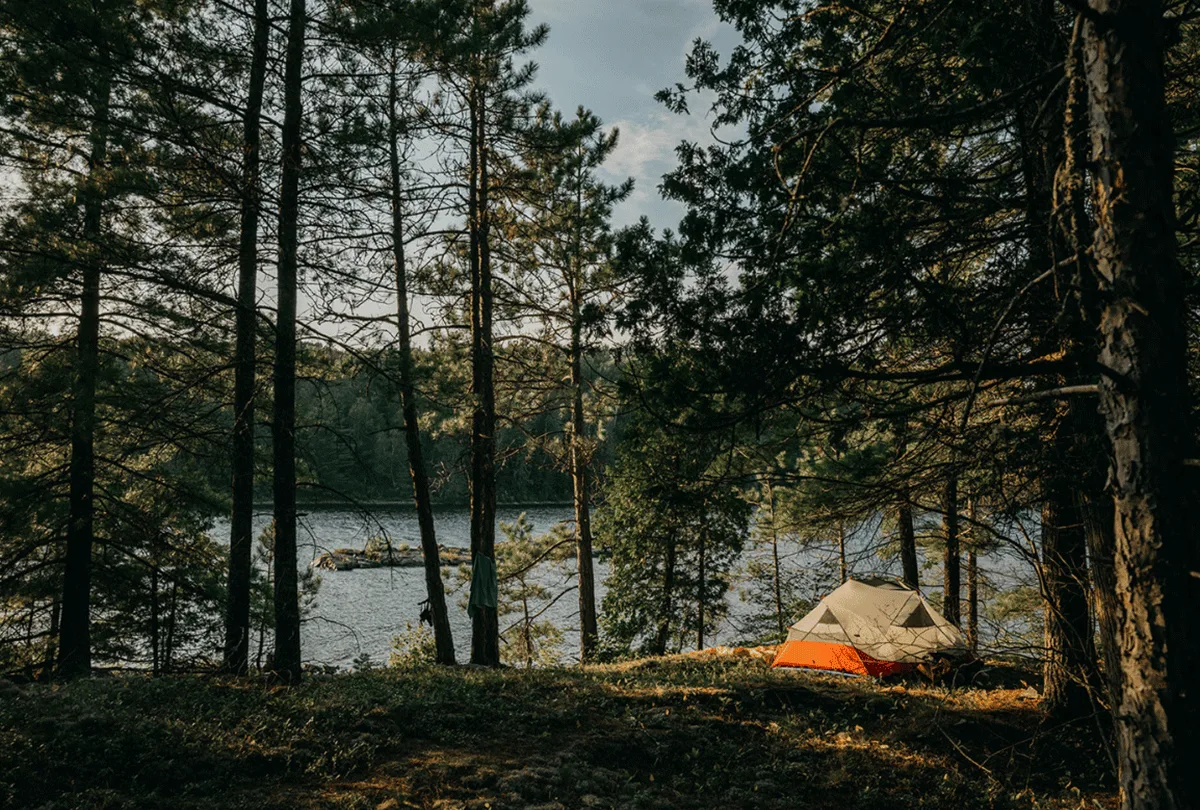
Camping out under the pine trees with a million-dollar view of Matagamasi Lake.
Some of our favourite spots canoeing in Temagami
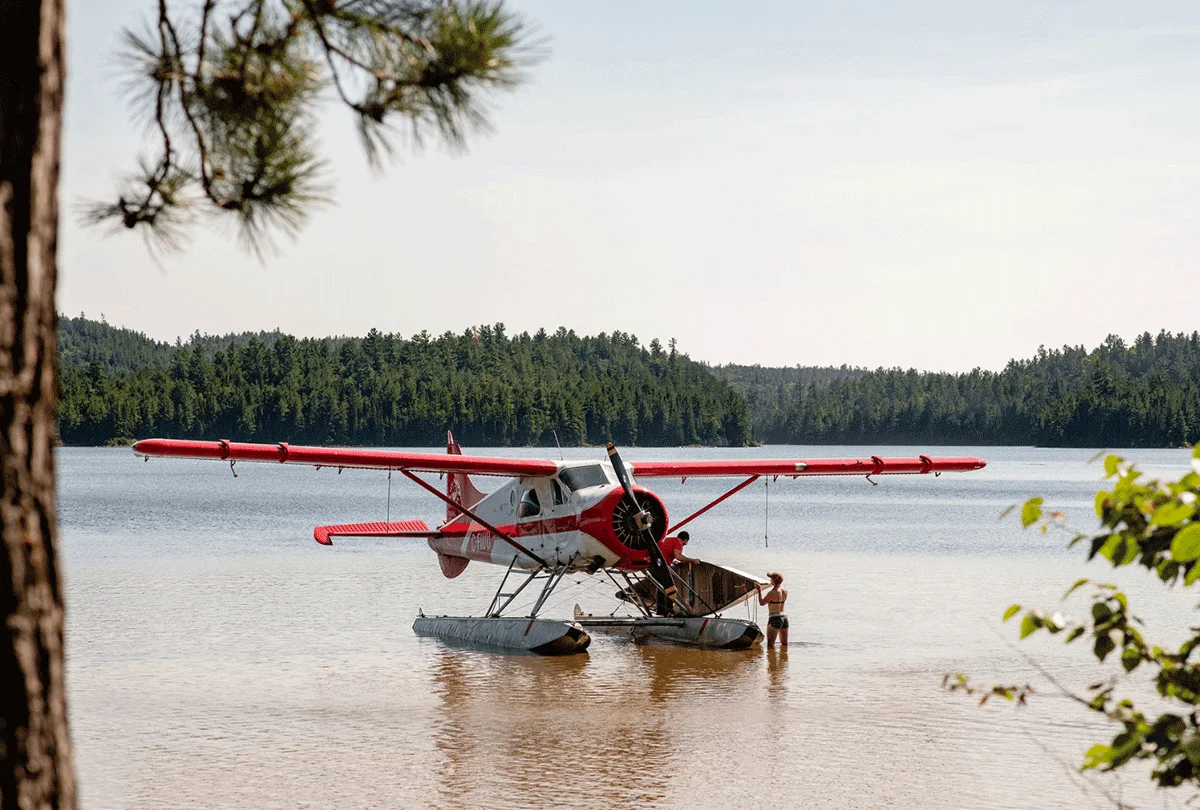
The karibu guided paddling tour starts with a quick flight on a Canadian-made Beaver bush hydroplane to our canoeing starting point in a special corner of the Temagami — the Chiniguchi Waterway. We explore this unmanaged provincial park in the southwest section of the Temagami Wilderness, and up into Wolf Lake, considered one of the gems of the area.
White quartzite cliffs and ancient pines at Wolf Lake
Wolf Lake is one of the highlights of Temagami. Its deep crystalline water is ringed by white granite, quartzite cliffs and towering old-growth red pines.
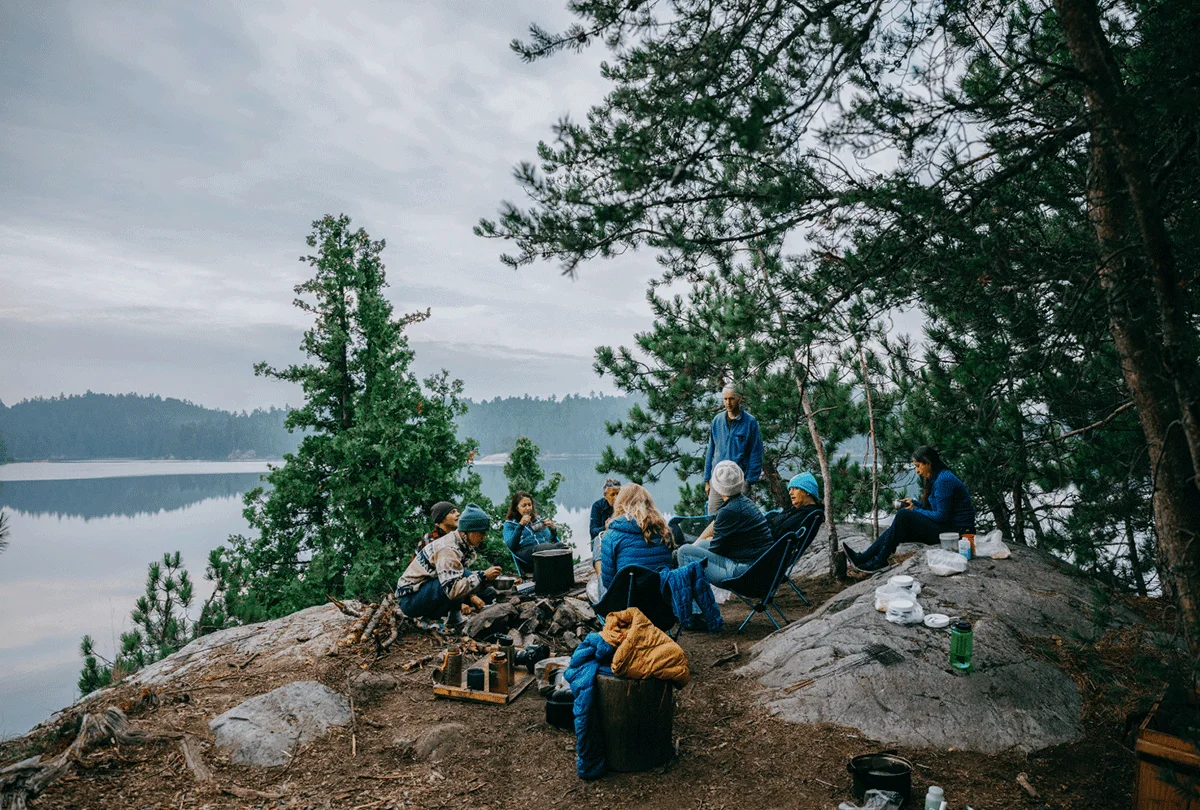
You can’t beat a great campsite, and there are many in Temagami. This is one of our favourites, with a panoramic view of Wolf Lake.
Indeed, only 1.2% of the world’s old-growth red pine forests remain, with nearly half of all types of old-growth pines found in Temagami. The largest known contiguous stands surround Wolf Lake.
Swimming in a waterfall at Paradise Lagoon and paddling alongside Indigenous pictographs at Matagamasi
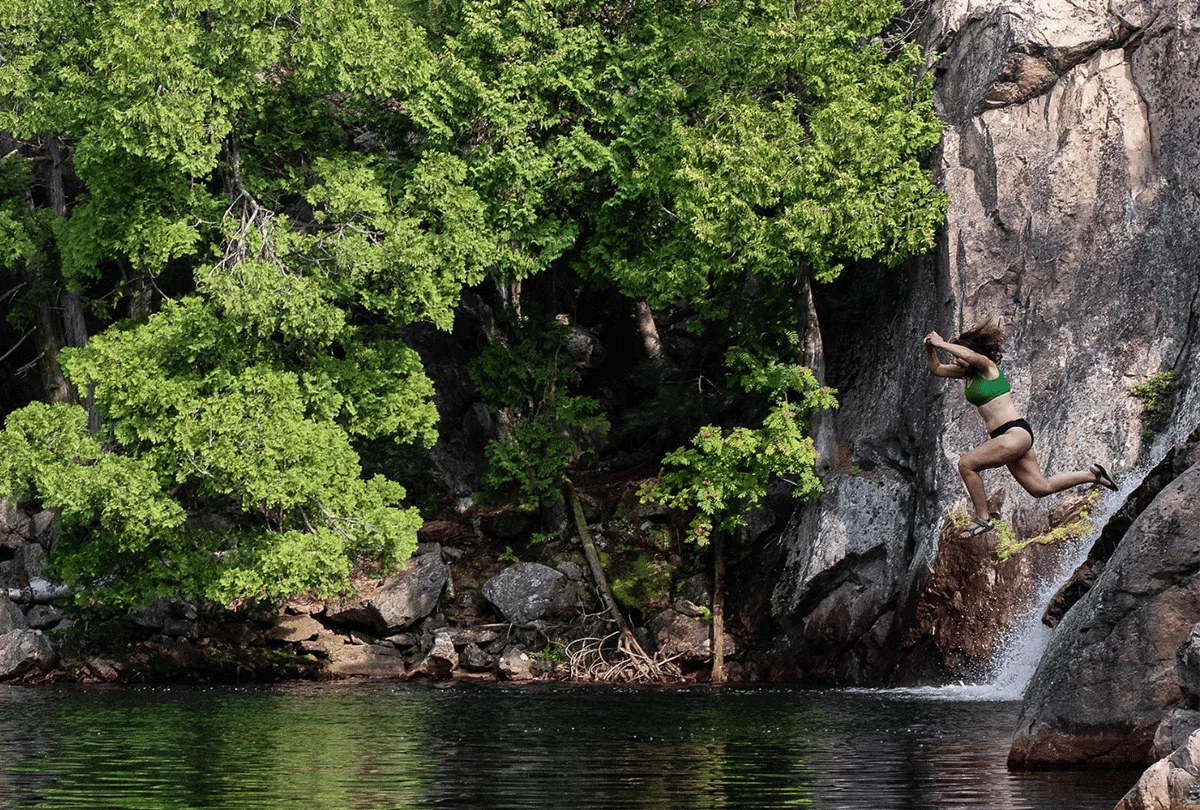
A dip in a refreshing lake after canoeing is pure bliss. karibu founder, Andrea Mandel-Campbell, takes a plunge into Paradise Lagoon.
Another favourite stop of our guided paddling tour is Paradise Lagoon. A more perfect swimming hole could not be conceived, with a 30-ft granite waterfall streaming into deeply refreshing blue-green water.
After taking a plunge in the Lagoon, we paddle through Matagamasi Lake, stopping to see ancient Indigenous pictographs painted onto the rock face just above the water line.

Checking out ancient Indigenous pictographs found along the waterline of Matagamasi Lake.
What you need to know about canoeing in Temagami
When to go
Portaging
Getting there
karibu small group tours through Temagami Wilderness combine the best of classic Canadiana

karibu tour group on our last paddling day.
Our exclusive karibu-curated 50-kilometre (31-mile) Canada canoe trip is designed for solo travellers, families, friends and adventure travellers looking to experience the magic of the true backcountry — gliding across glassy lakes, waking to the sound of loons and gathering around the fire under a big, starry sky — with some rustic comfort.
Combination of camping and a cozy backcountry lodge
The following day, we take off in a bush plane and head north, kicking off our guided paddling tour through the renowned Temagami’s majestic wilderness. Over the course of three-and-a-half days, we paddle an average of 12-15 kilometres a day, setting up camp each night at a new, well-appointed and scenic campsite.
On day 5 of our tour, we return to the lodge victorious, ready for a sauna, a hot shower and a deliciously filling meal designed to celebrate your journey.
Accessible canoe trip for new canoeists and experienced paddlers
While no prior paddling experience is required, participants should be moderately fit and comfortable canoeing 2-3 hours at a stretch (with breaks and lunch) and 5-6 hours a day, including on windy days. The Temagami is the best place to canoe in Ontario that is relatively accessible (as opposed to Quetico Provincial Park, which is quite remote), and is renowned for its flat water paddling. However, we always have to be prepared for a little wind and weather.
The canoe route has been designed to paddle smaller lakes and avoid long “ankle-breaking” portages. It’s ideal for anyone looking for an authentic canoeing experience and is a great choice for a family canoe trip for kids 12 and older.