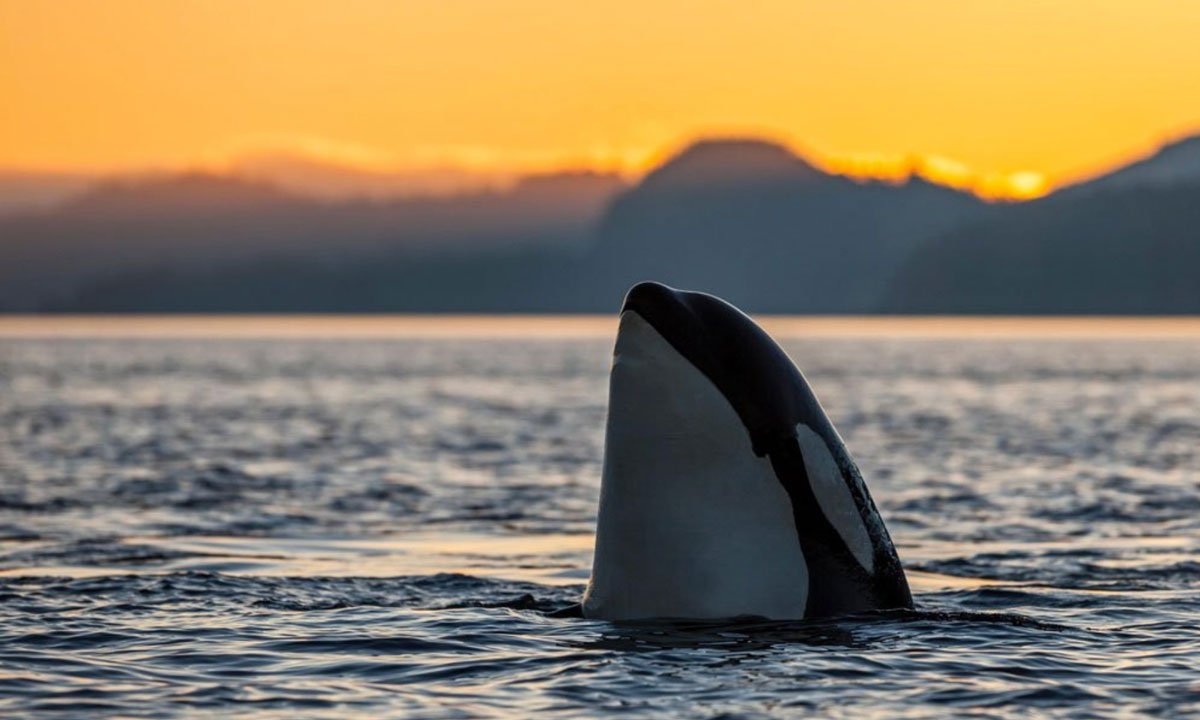
Vancouver Island is the best place in the world to see orca whales in their natural habitat.
Haida Gwaii islands, an archipelago previously known as the Queen Charlotte Islands in British Columbia, Canada’s Pacific Northwest — the cultural and spiritual home of the Haida people — has long had a magnetic pull on nature enthusiasts, adventure travelers and kayakers, drawn to its rugged beauty, rich Indigenous history and wildlife.
If that sounds like your idea of a great adventure, you may also want to consider the northeast coast of Vancouver Island. The Island’s far less traveled northeast is not only spectacularly beautiful but is the best place in the world to see orca whales and is home to the vibrant culture of the Kwakwa̱ka̱ʼwakw people.
It’s also closer to Vancouver than the Haida Gwaii islands, which makes it a more accessible and cost-effective way to experience the singular wilderness of Canada’s North Pacific.
Here are some comparisons to help you when planning your next trip.

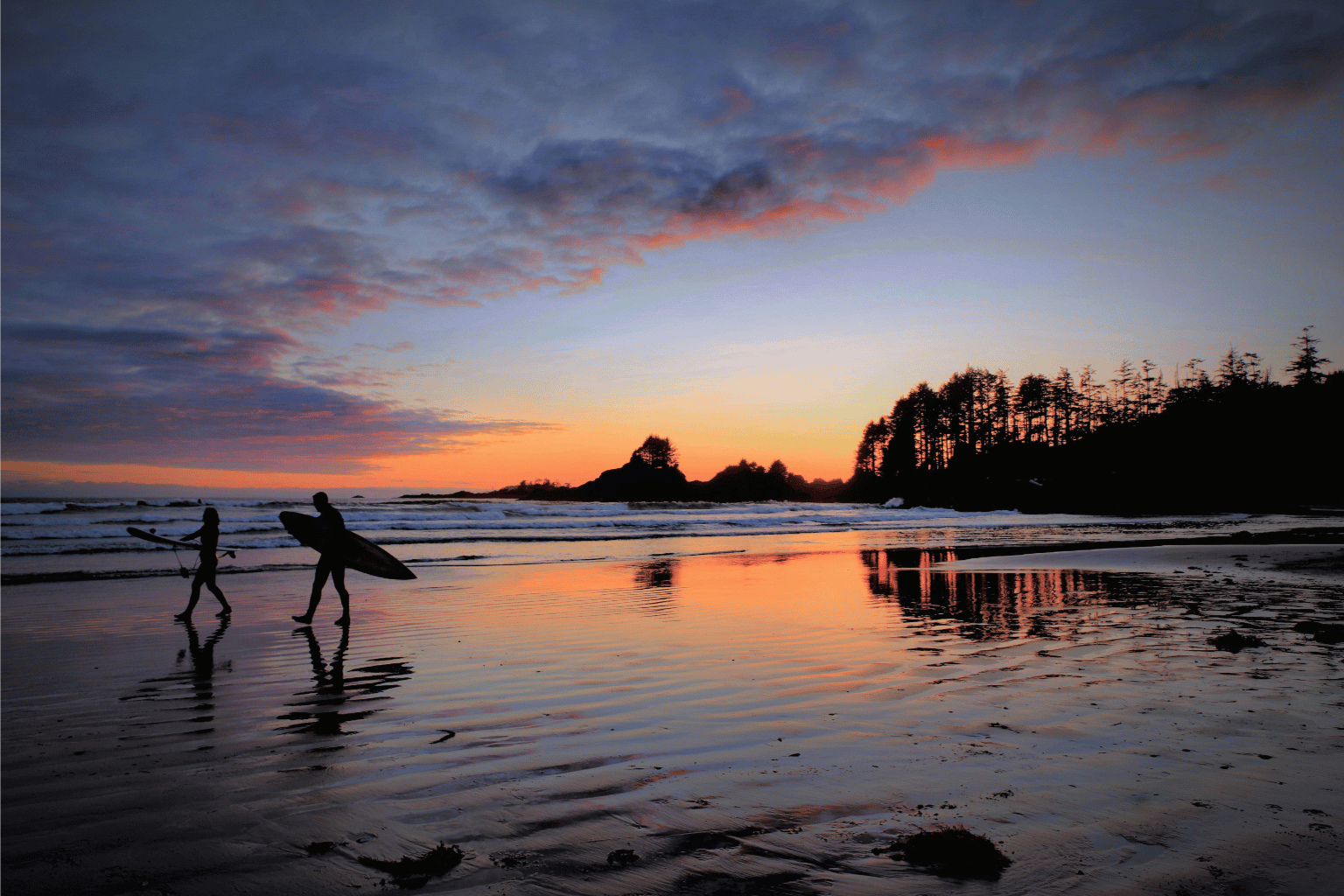
The ocean and Coastal Mountains of British Colombia, Canada, from the Broughton Archipelago, Vancouver Island, at sunset.
Islands in British Columbia with diverse landscapes
Haida Gwaii is a rugged, remote wilderness, closer to Alaska
North Vancouver Island is less expensive and more accessible, closer to Vancouver
North Vancouver Island and the town of Port Hardy, where our North Coast karibu adventure is based, is a one-hour flight from Vancouver, and can also be reached by car and ferry.
The North Coast sits at the intersection of the open ocean of the Pacific to the north, the famed Johnstone Strait funneling into the 200-plus islands of the Broughton Archipelago to the south and the mainland’s Coastal Mountains to the east.
The result is both majestic and intimate, with 360-degree panoramic views of snow-capped peaks sloping to winding, rainforest-covered inlets. It may not be as remote as Haida Gwaii, but the North Coast has a magic of its own.
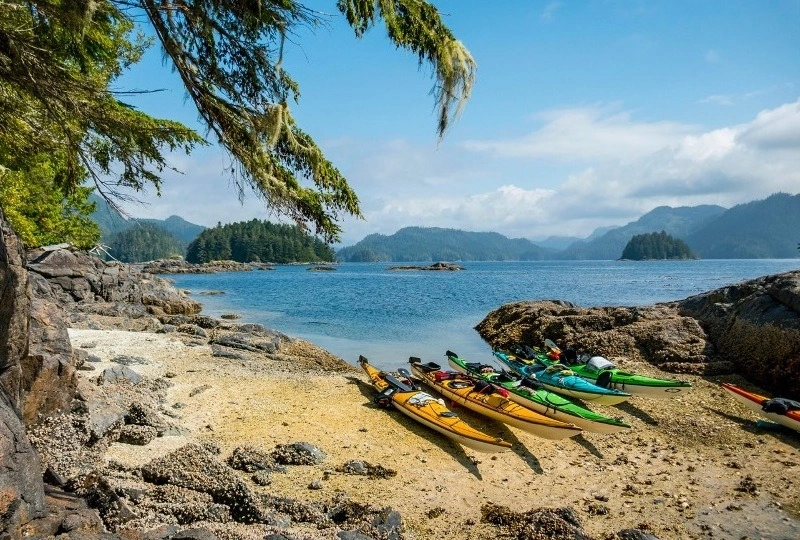
Kayaking in the Broughton Archipelago, northeast of Vancouver Island.
Both destinations are top kayaking and wildlife hotspots
Expedition kayaking for advanced kayakers — Haida Gwaii
Still, there are incredible places to explore by boat, like Gwaii Haanas National Park Reserve. Gwaii Haanas is a uniquely untouched ecological paradise with an Indigenous history stretching back more than 12,500 years — and it’s home to more than 1,800 islands and inlets.
Base camp kayaking for groups with mixed experience — Vancouver Island
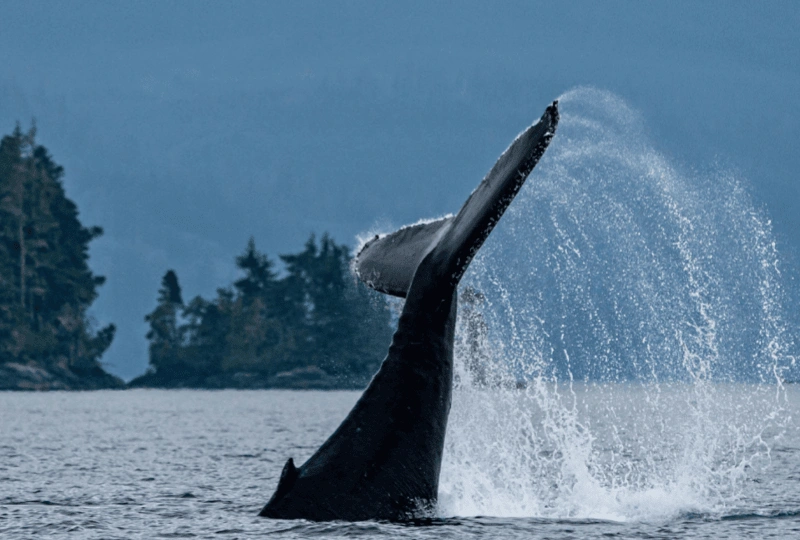
Further south, off Vancouver Island’s northeast coast, karibu bases its three days of kayaking on Hanson Island, which sits at the mouth of Johnstone Strait and Blackfish Sound. Combining exploration with comfort, we take day trips that are less demanding than the open ocean, although currents can still be strong, tucking in and out of island narrows and paddling into the Broughton Archipelago, on the lookout for Humpback whales feeding on the surface, Steller sea lions, and white-sided dolphins.
Unbeatable wildlife and whale watching — Vancouver Island
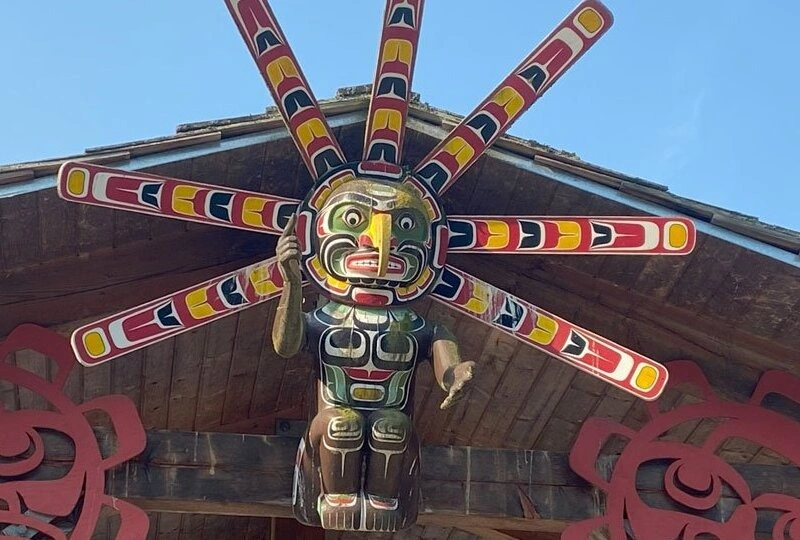
Carving of the Sun, Alert Bay, Land of the ‘Namgis First Nation.
Opportunities to support Pacific Northwest Indigenous communities
Haida Gwaii is the heartland of the Haida cultural identity and is deeply woven into Haida cosmology and oral traditions. Home to ancient villages, totem poles and longhouses, Haida Gwaii is a living archive of their history, including the Haida’s resilience in the face of colonization and enduring connection to the natural world.
The Haida Heritage Centre, including its Haida Gwaii Museum, is an excellent place to learn more about Haida culture and traditions. The Gwaii Haanas National Park Reserve also features a variety of cultural sites, as well as remnants of Haida Longhouses and Monumental Poles, some of which can be found in the SG̱ang Gwaay Llnagaay (Nan Sdins) village, a UNESCO World Heritage Site.

Members of the Ḵwiḵwa̱sut̓inux̱w nation on their ancestral territory, Hada (Bond Sound), in the Great Bear Rainforest of British Columbia.
Northern Vancouver Island and the adjacent mainland are home to the 18 tribes of the Kwakwa̱ka̱ʼwakw. As part of karibu’s tour, we spend a day on Alert Bay, a cultural focal point for the Kwakwa̱ka̱’wakw, with a local Indigenous guide. We visit the U’Mista Cultural Centre on the site of a former residential school, which showcases a renowned collection of potlatch regalia that has since been returned to the community. We also visit the Namgis Big House to watch a performance of traditional Kwakwa̱ka̱’wakw dances and enjoy a traditional lunch of fish soup and fry bread.
In addition, we visit the workshop of an internationally renowned Kwagu’ł carver and artist just outside Port Hardy. We also journey through the majestic inlets of the mainland to Hada, where we have been welcomed as the first and only tour group to visit Nawalakw, a healing centre and cultural youth camp on the ancestral territory of the Ḵwiḵwa̱sut̓inux̱w Nation, in the Great Bear Rainforest.

Calvin Hunt, renowned Kwagu’ł carver, artist and elder.
All told, karibu collaborates with seven Indigenous partners and businesses, from guides and artists to wildlife viewing operators, hotels, dance troupes, caterers and cultural leaders, who share their stories and culture with us on their terms.
Any place in Canada’s Northern Pacific is a dream getaway
Canada’s Northern Pacific is truly a global treasure — and as a nature, wildlife and Indigenous cultural destination, it’s pretty hard to beat. Where you go depends on what you are looking for, and if Haida Gwaii is a little too far or a little too expensive, the Northeast coast of Vancouver Island is a world-class hidden gem well worth exploring.