Zambia is where you go in Africa when you don’t want to follow the herd. When you don’t want to be sitting among a dozen other jeeps bearing down on a lone leopard, craning your neck over the crowd so you can check that box and say, “Saw it!”
It’s where you go if you are looking for a less-traveled, more intimate and authentic safari experience — one that puts conservation and sustainability at the forefront and invests in highly qualified, safety-conscious guiding.
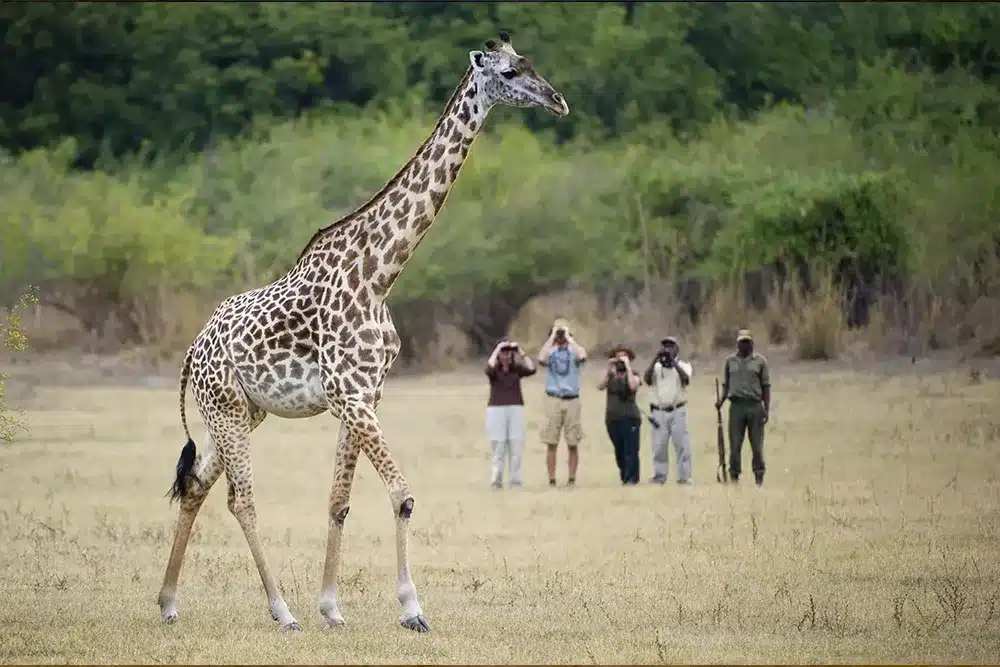
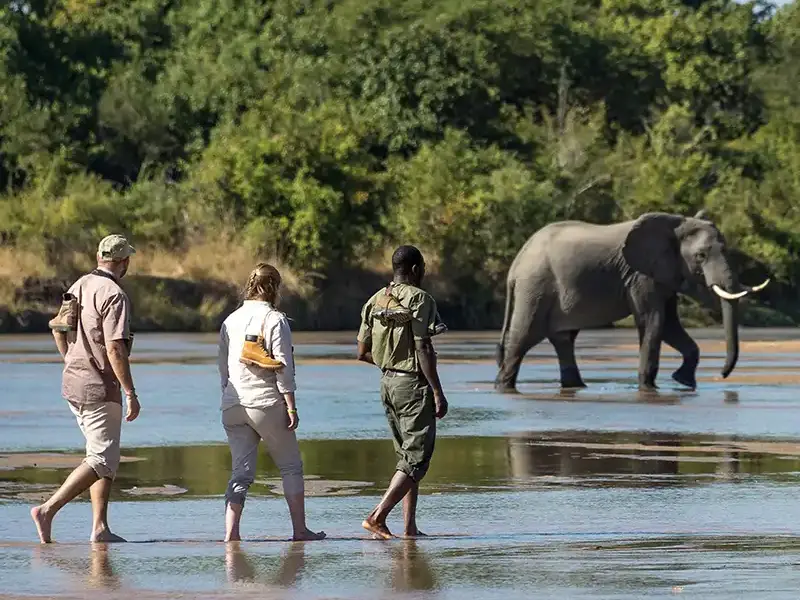
Moreover, it’s the place you go if you want a different, more visceral and active safari experience. One where you don’t spend endless hours in a jeep, stopping on a well-paved track to view wildlife like so many displays at a Disney amusement park. That’s because Zambia is the birthplace of the walking safari, a kinetic and sustainable way to experience the African bush and appreciate its beauty.
Iconic national parks, fewer tourists and incredible wildlife
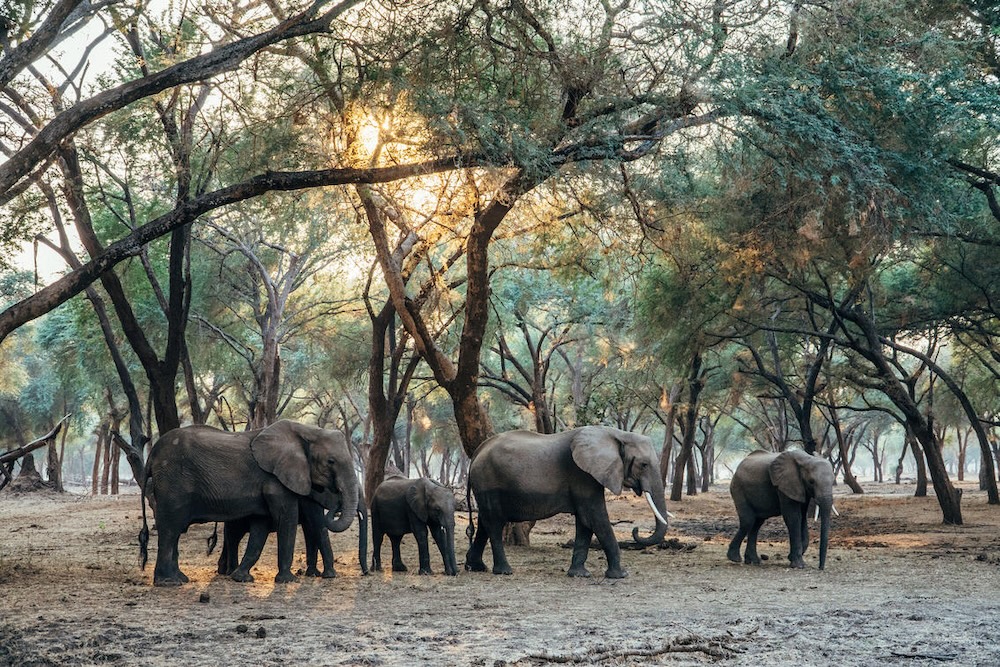
Zambia doesn’t get the attention of other well-touristed safari hotspots like Kenya and Tanzania, and that’s just fine. The country has protected some 30% of its territory for conservation, national parks and wildlife management areas, but with much fewer tourists, that means a lot more pristine nature to appreciate without the crowds.
And there is a lot to appreciate. Zambia is home to many spectacularly unique and defining landscapes.
- The Luangwa River. One of the longest rivers in Africa, it is also undammed, creating an undulating series of ever-changing oxbow tributaries, lagoons and white-sand riverbeds as it follows the wet and dry seasons. The river is the heart of Zambia’s most well-known national park, the South Luangwa National Park.
- The Zambezi River. The river that gives the country its name traverses marshes in the northwest, rumbles through Victoria Falls, and finally eases into the gentle currents of the Lower Zambezi, its wide expanse dotted with sand bars and shores fringed with beaches. The river and its islands, floodplains and lagoons can be seen on a river safari through the 4,000 square-kilometre Lower Zambezi National Park.
- Victoria Falls. The highlight of the Zambezi River and one of the most iconic sights in Africa, the massive two-kilometre waterfall plummets into a hundred-metre gorge in a display of nature’s power.
- Kafue National Park. Known for its diverse ecosystems, Kafue is frequently dubbed a “mini Okavango” for its intricate network of channels, lagoons and floodplains that support unspoilt biodiversity. It’s Zambia’s largest national park, yet it’s the least travelled despite its sublime fishing, potential for land or river safari, and best cheetah viewing in the country.
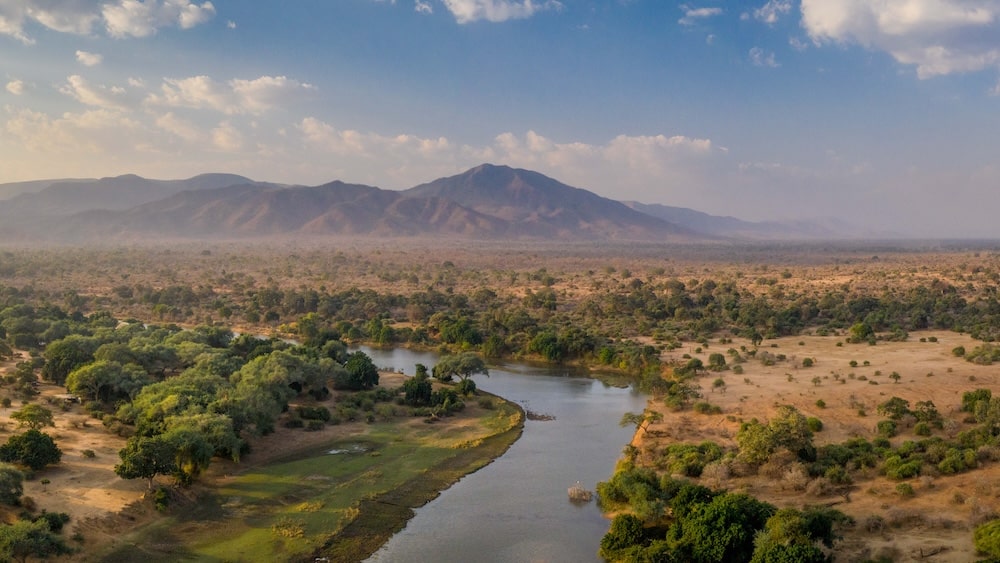
The river systems, which anchor an array of sweeping and intimate landscapes, from open grass flood plains to riverine forests of winterthorn, ebony and mahogany trees, are the sustenance of the abundant and diverse animals in Zambia. Zambia is home to some of Africa’s largest populations of leopard, lion, elephant and hippo. It also boasts large packs of wild dogs, all manner of antelope, from waterbucks to kudu, and the endemic Thornicroft giraffe.
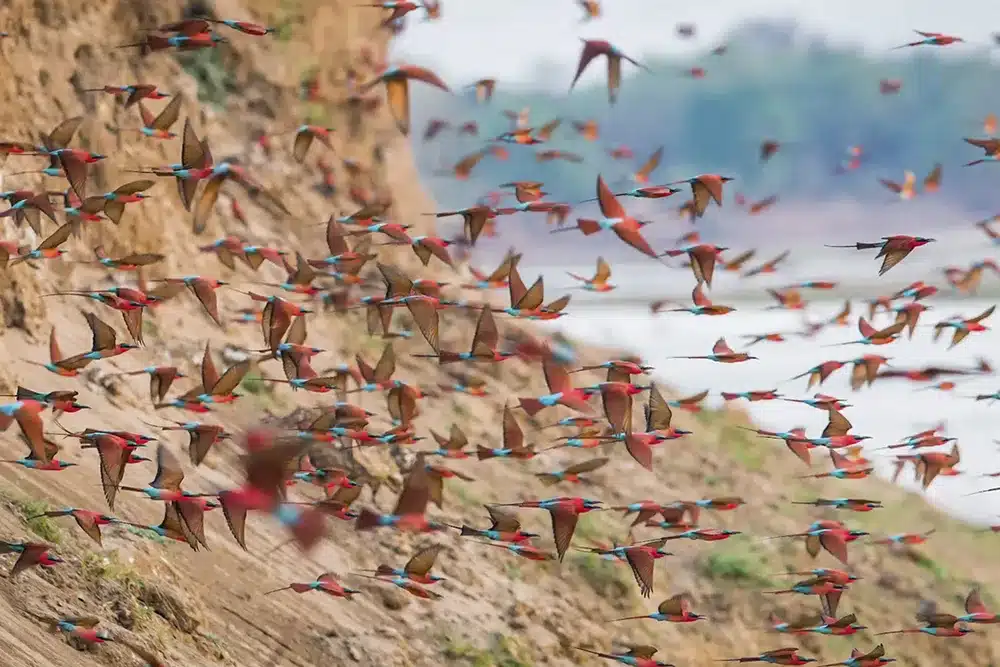
And if you love birds, there are more than 860 species, from the dazzling carmine bee-eater and the prehistoric Shoebill to the endemic Chaplin’s Barbet with its red eye patch, vibrantly hued kingfishers, and the African Fish Eagle, its loud call referred to as “the voice of Africa”.
Intimate safari lodges, commitment to conservation
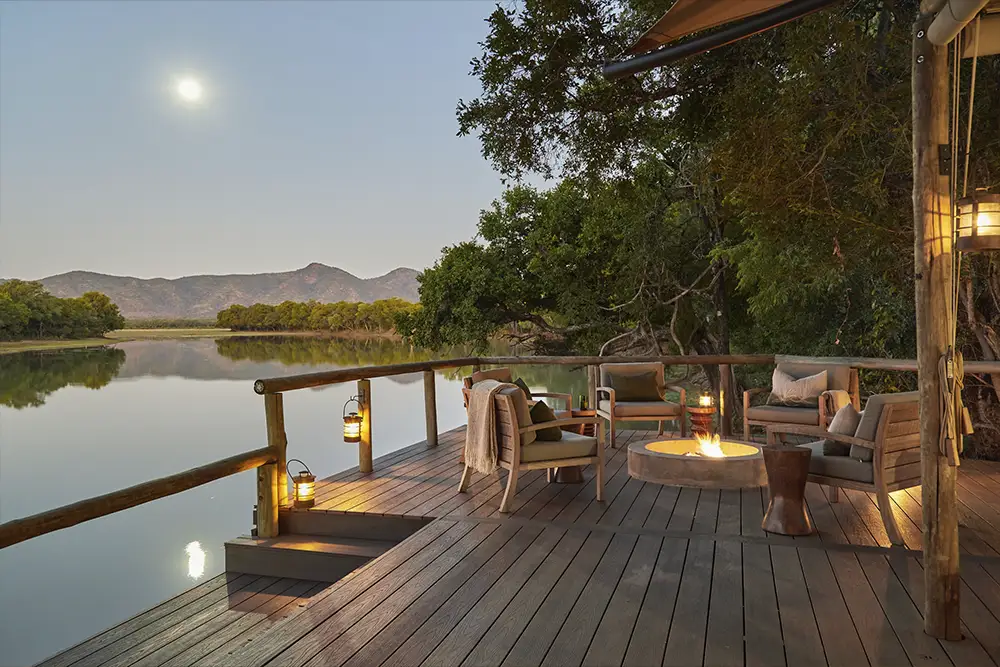
One of the things we really like about the Zambia safari experience is the size of the lodges and bush camps, their attention to service, and their commitment to conservation and community development. They understand the importance of not overwhelming the landscape with too many rooms and too many people. Many of the lodges and camps are small and owner-operated, with just three to six rooms, and are designed organically, made with local reed or thatch. Many of the bush camps are seasonal, completely dismantled and rebuilt every year.
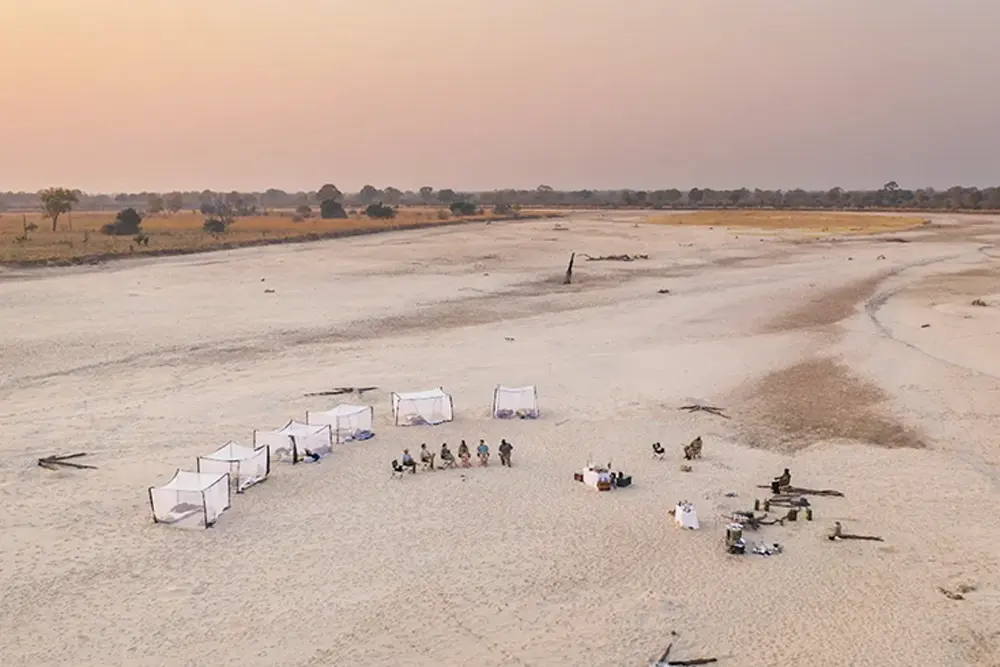
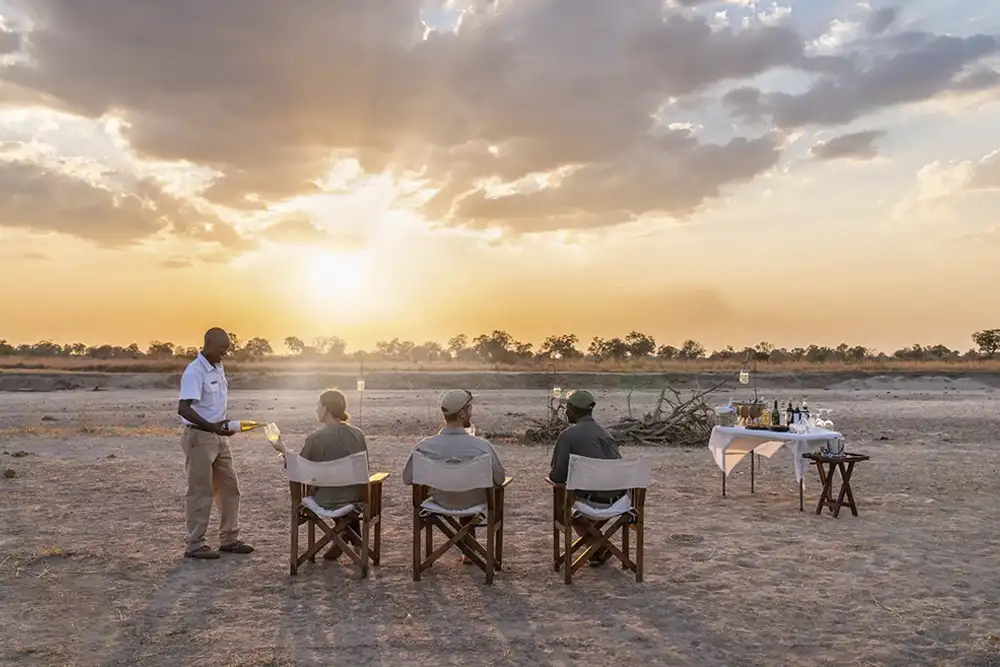
But while they are almost built into the landscape, they exude a simple, organic elegance and an appreciation for design and quality. Whether it’s a 6-star luxury eco-lodge or an authentic tented bush camp, the linens and bedding are deliciously fine, and the attention to service is impeccable. That might mean a decadent lunch on a sandbar in the Lower Zambezi, complete with Aperol Spritz and G&Ts, or a simple but delicious breakfast beautifully laid out around a fire in a dry river bed while elephants graze nearby.
The lodges are all active in Conservation Lower Zambezi and Conservation South Luangwa and play a leading role in wildlife and ecosystem protection, community outreach and anti-poaching measures. The safari operators care deeply for the communities in which they operate, helping to fund schools and scholarships, build schools and medical clinics, and drill boreholes for clean drinking water.
Why do a “walking safari”?
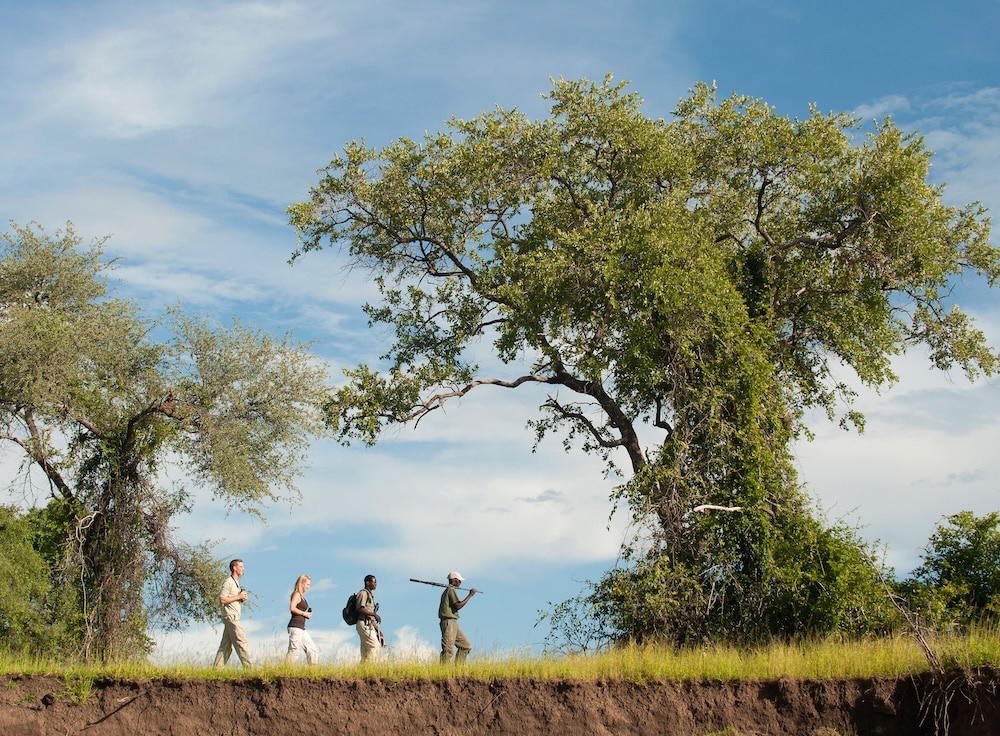
First created by Norman Carr, a park ranger in the 1950s, as a way to steer people away from big game hunting and offer a sustainable alternative that could generate a new appreciation for wildlife conservation, walking safaris have become a trademark of Zambia. The country, together with safari lodges, has developed an intensive training program for guides and wildlife police officers that distinguishes Zambia from other countries. Their knowledge of the bush, from big game to the smallest plants and insects, provides visitors with a deep appreciation and understanding of what they have come to see and glimpse small details often missed from vehicles.
Walking safaris are exhilarating and more eco-friendly, a key tenet of karibu’s tours, but not meant to be strenuous. Each walk is typically 2 to 3 hours long, through gently rolling terrain, with many stops to observe wildlife. The biggest challenge is the heat, with temperatures reaching above 30°C in September and October, but there is always a stop for a cup of tea or a cold drink at a special place on the river or under the ebony trees to refresh. Still, while every walk is accompanied by an armed and trained wildlife police officer, not everyone is comfortable walking in the African bush, and for those who are not, there are plenty of driving options.
Travel guide to Zambia’s national parks: Best things to see and do
Spot leopards through the bush in Zambia’s South Luangwa National Park
South Luangwa National Park is known for its pristine wilderness, diverse ecosystems and abundant wildlife. Step into this vast swath of eastern Zambia, covering approximately 9,050 square kilometers (3,490 square miles) in the Luangwa Valley — part of the Great Rift Valley — bordered by the Luangwa River to the east and the Muchinga Escarpment to the west. The valley’s natural barriers have limited human migration and transport, making it a sanctuary for some of Africa’s most iconic species.
The park spans two main woodland savannah ecosystems: Southern Miombo woodlands on the higher slopes and Mopane woodlands in the valley bottom. The Luangwa River passes through, its lagoons creating rich habitats that support diverse wildlife. Because the river is undammed, its banks become flooded during the rainy season, which changes its course. This process enriches the grazing lands with silt deposits and creates unique oxbow lagoons; bushbucks, elephants, buffalo and impalas gather around these important wetland ecosystems.
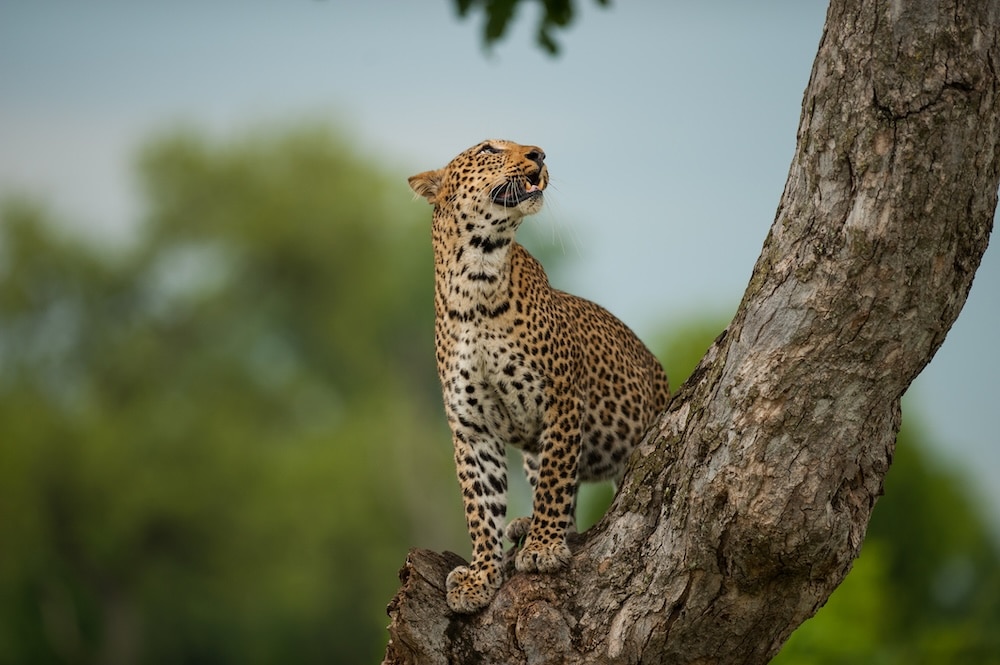
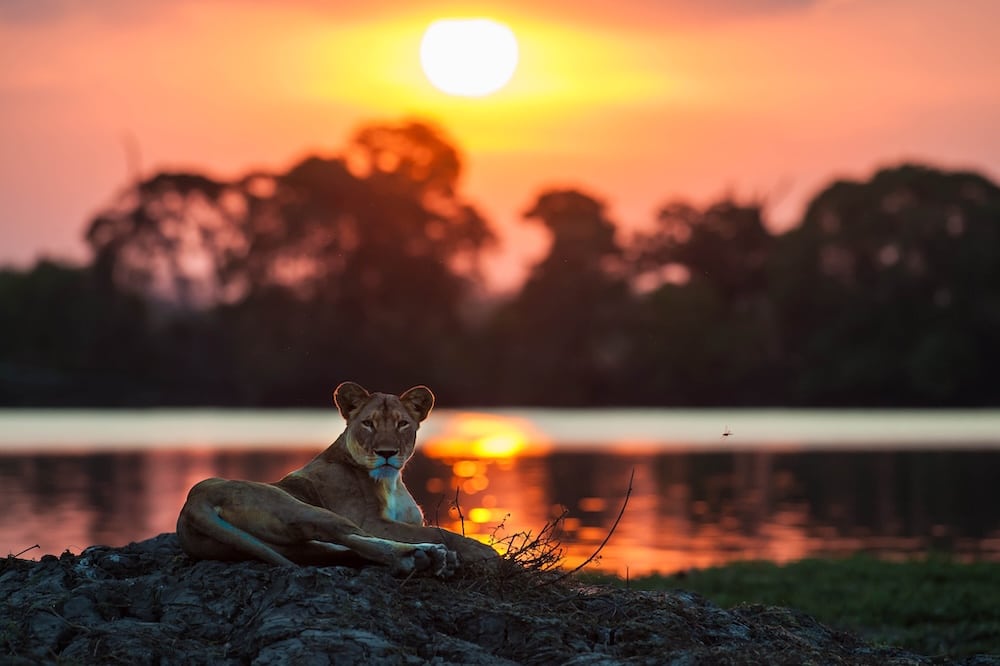
Nicknamed the Valley of the Leopard, South Luangwa has one of the highest leopard densities — not just in Africa but in the world — best seen on night drives. You’re also likely to see the apex predator, the lion, prowling here, where an estimated 400 lions call the valley home. It is also one of the few African parks home to four of the Big Five: lion, leopard, elephant and buffalo.
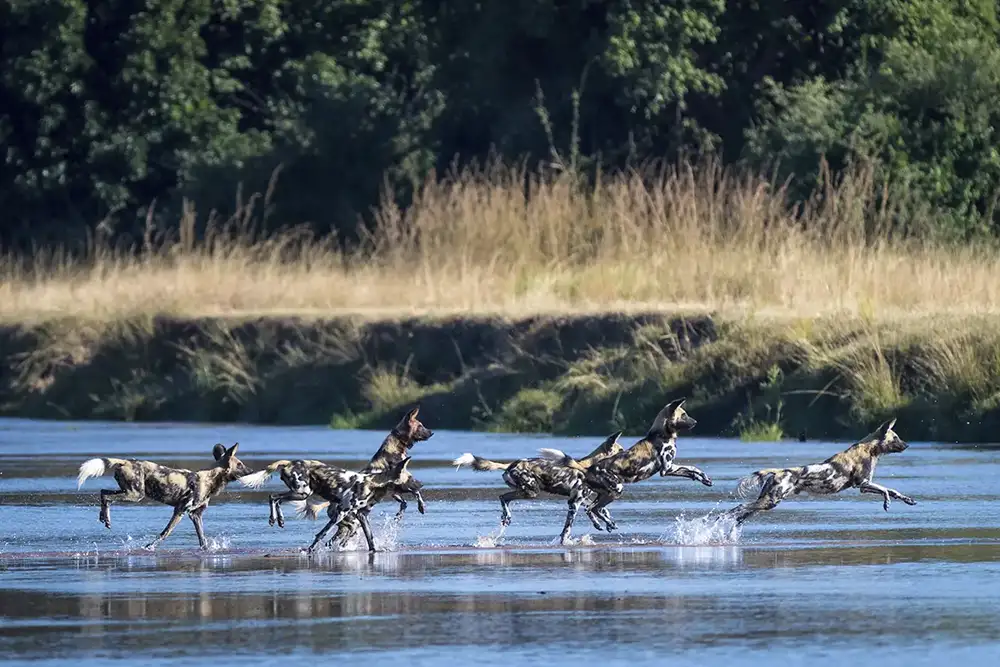
The park’s successful anti-poaching campaigns have created conservation success stories like the revival of the rare African painted wild dog. The protected area has preserved species that are endemic to South Luangwa, such as the Thornicroft giraffe, Cookson’s wildebeest and Crawshay’s zebra. In sum, the park supports over 60 mammal species and more than 400 bird species, including 39 birds of prey and 47 migrant species.
Experience a walking safari where it all began
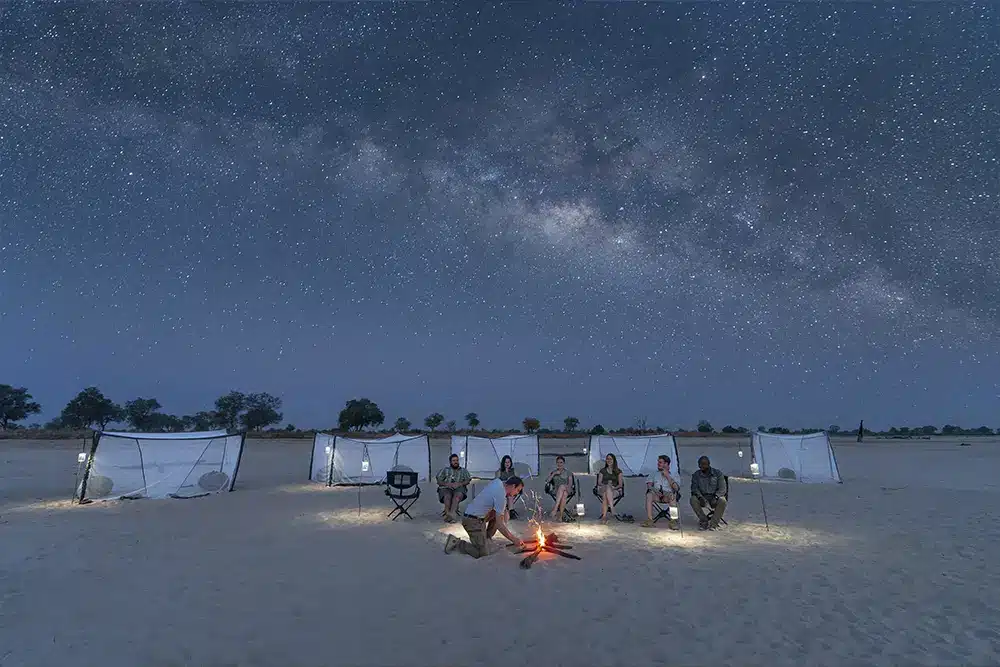
A handful of camps are designed to accommodate walking from one camp to the next with a sleepout in the bush en route — a lovely experience that gives one the feeling of being on an expedition. Sleepouts under the stars are a magical experience with just a mosquito net over your comfy bed under a starlit sky. It’s a special experience to wake up at one camp, have breakfast by the fire, and head off on a three-hour walk to the next camp.
The park is also a top choice for night safaris, as it’s one of the few African parks where night drives are permitted. Night drives in South Luangwa National Park provide a rare chance to observe the African bush’s nocturnal wildlife, revealing species and behaviours invisible during the day. As darkness falls, animals such as lions, leopards, hyenas, mongooses, civets, bush babies and genet cats become active, offering thrilling and intimate wildlife encounters that daytime safaris cannot match. Expert guides and spotters use skillful tracking and red-filtered spotlights to locate animals by the reflection and blinking of their eyes without disturbing them, ensuring responsible wildlife viewing. The opportunity to witness predators like hunting leopards, which are especially elusive and active at night, makes sightings particularly exciting and memorable.
Special experiences in Zambia’s South Luangwa National Park:
- Take a night safari to see nocturnal animals in Zambia, one of the few parks in Africa that allows drives after dark.
- Sleep out under the stars, tracing constellations and fall asleep to views of the Milky Way on full display.
- Go birdwatching at the Nsefu salt pans, known for their hot springs. Keep an eye out for the crested crane, which is best seen in the Emerald Season.
Travel tips for Zambia’s South Luangwa National Park:
- There is a large range of lodges to choose from, and all of them have phenomenal guides — many of whom grew up in the area, and are renowned for being among the best trained in Africa. All go through rigorous training in order to take visitors walking or driving. While your accommodation may differ from camp to camp, the constant is that your guide will be top-notch.
- Camps in South Luangwa really facilitate involvement in local conservation efforts and community projects, like drilling boreholes for fresh water in communities. The camps are located relatively close to communities, so you can visit a local village to see the positive impacts of tourism at work.
Take a river safari in the Lower Zambezi
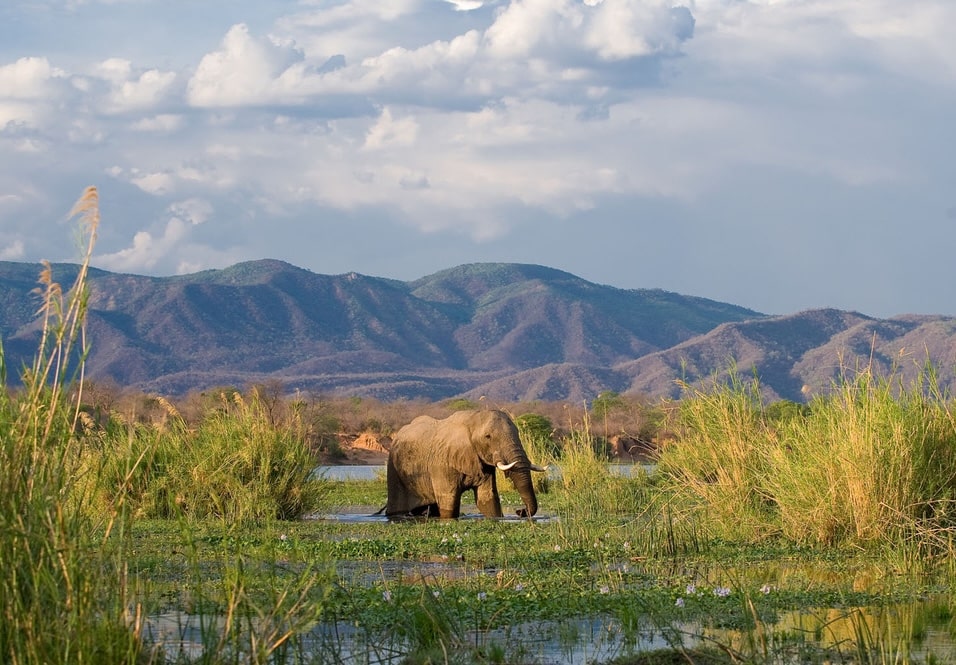
Bordered by the picturesque Zambezi Escarpment and the Zambezi River – one of the longest and largest rivers in Africa – Zambia’s Lower Zambezi National Park is a vast wilderness of floodplains, fairytale-like winterthorn forests and enormous ancient baobab trees, with the river, islands, lagoons and floodplains forming a diverse and scenic ecosystem. The 4,000 square-kilometre park was a private game reserve for Zambia’s president until 1983, when it was declared a national park; this long period of restricted access helped protect the park from mass tourism and poaching, preserving its wildness. Today, the park and the adjacent Mana Pools National Park in Zimbabwe form a UNESCO World Heritage Site, recognized for their outstanding natural beauty and remarkable concentration of wildlife.
The Lower Zambezi’s unique landscape is ideal for experiencing a one-of-a-kind river safari. The river, dotted with small islands and sand bars, offers impressive views of Zambia’s animals and the awe-inspiring Zambezi Escarpment. More than 50 mammal species live among the floodplains, including one of Africa’s healthiest elephant populations and the continent’s highest density of hippos. There are Cape buffalo, lions, leopards, crocodiles, and even occasional sightings of the endangered African wild dog.
Explore the Lower Zambezi’s iconic winterthorn forests
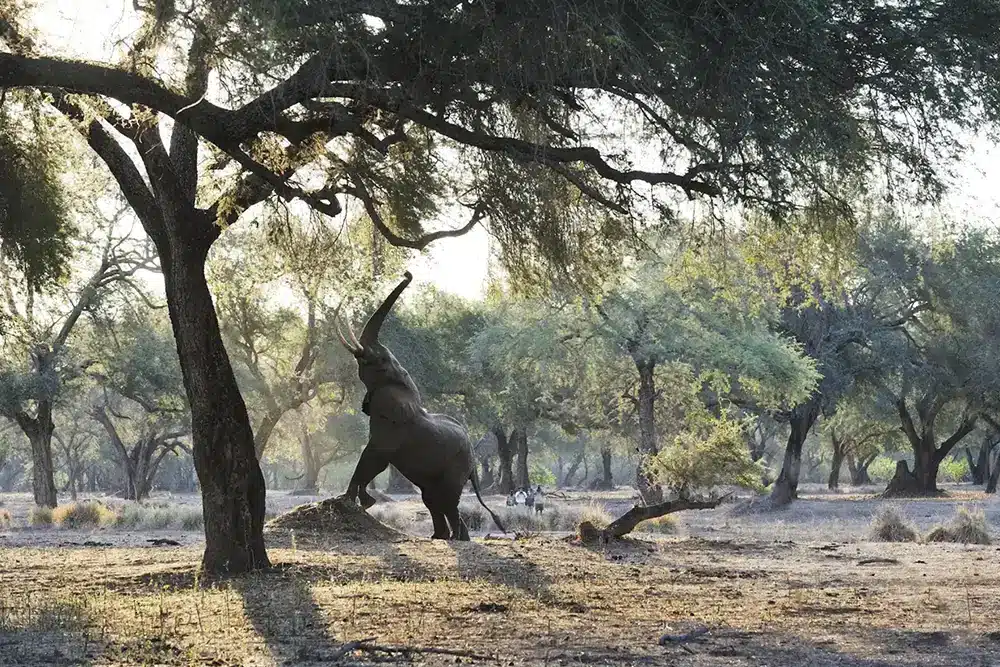
In addition to the River, the Lower Zambezi National Park is known for its lush and distinctive winterthorn forests. The forests, filled with grazing elephants, leopard and herds of impala and kudu, provide an ethereal ambiance quite unlike any other experience in the African bush. Walk, drive or enjoy a bush picnic lunch under the forest canopy with a view out to the Zambezi River.
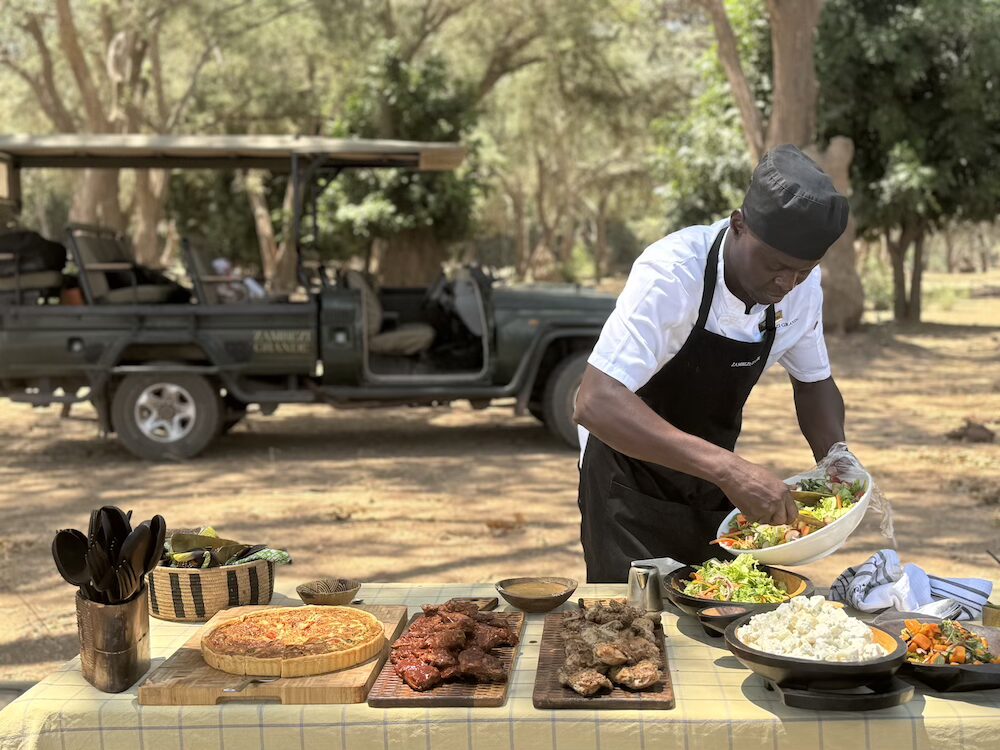
The Lower Zambezi remains one of Africa’s few untouched wilderness areas and is ringed by a larger game management area with no fences, allowing free movement of wildlife. The park’s wildlife is well-protected by the Zambia Wildlife Authority, the anti-poaching squads and conservation partnerships with the safari lodges. Strict regulations limit the number of boats and tourists allowed into the park to preserve the environment and wildlife.
The park’s remoteness, with no paved roads and limited human activity, offers visitors a sense of seclusion and authentic wilderness. The small number of camps in Lower Zambezi National Park makes for a very intimate experience.
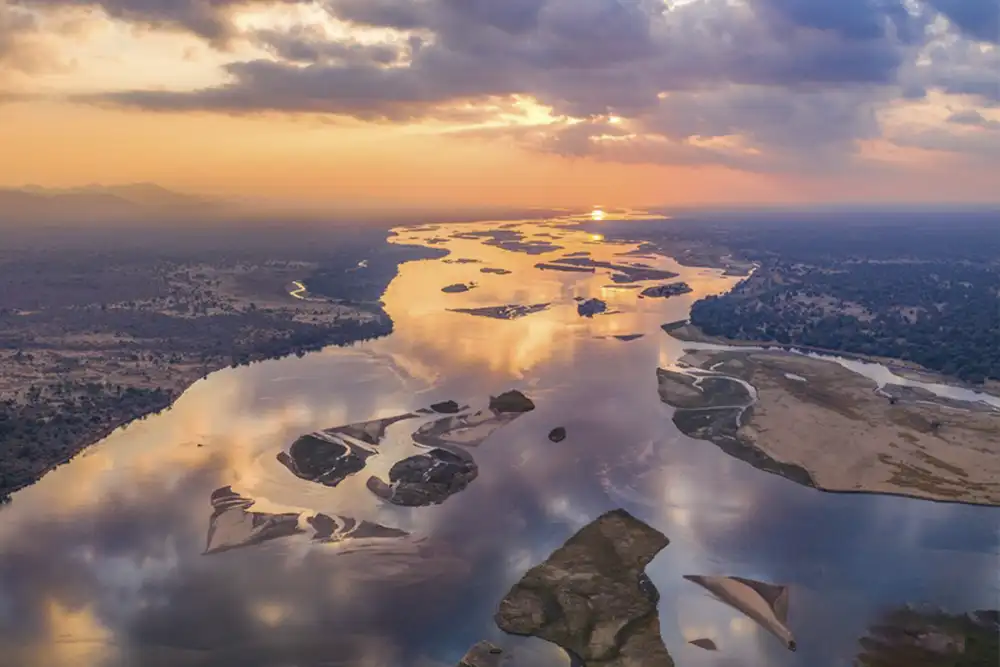
Exceptional experiences in Zambia’s Lower Zambezi National Park:
- Watch from the boat as herds of elephants cross the river to the sandy islands to bathe and eat.
- Have lunch on a sandbar in the middle of the Zambezi River.
- Try your hand at world-class catch-and-release fishing of the famous Tigerfish.
- End your day with a sundowner cruise along the Zambezi, a cold Mozi Beer or a Sannah cider in hand.
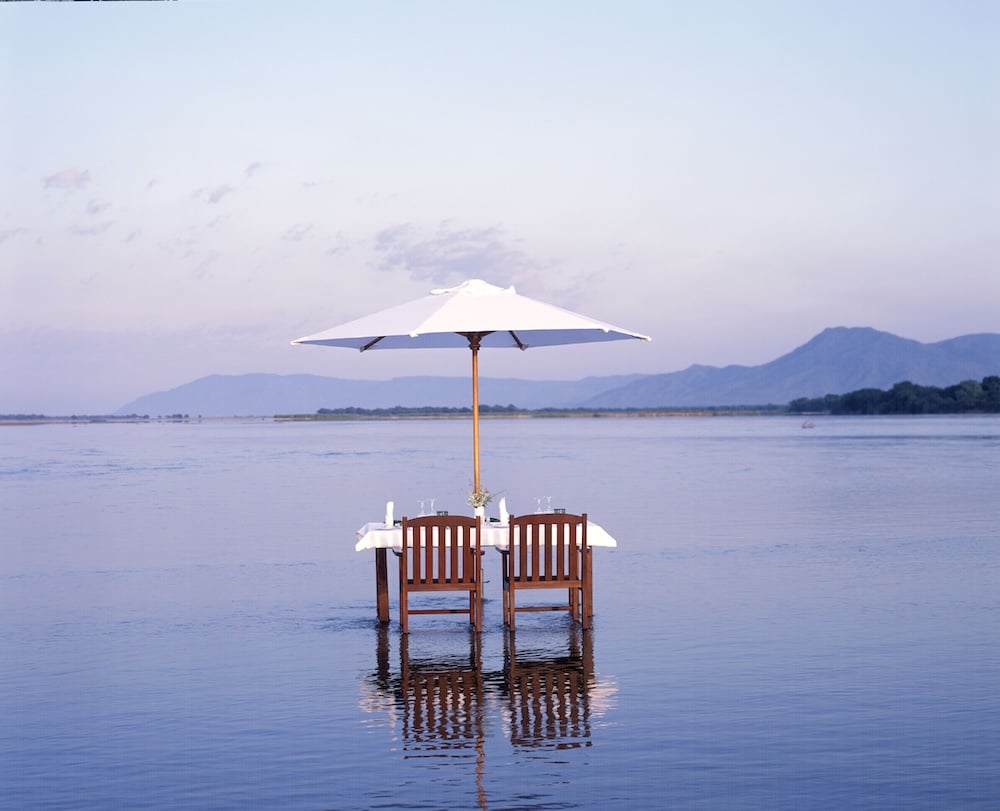
Travel tips for Zambia’s Lower Zambezi:
- The best accommodations are found along the banks of the Zambezi River, where you have a front row seat to a variety of wildlife river crossings.
- The Zambezi is the best catch-and-release Tigerfishing destination in Zambia.
- Lodges here offer canoeing on the side channels of the Zambezi, a quiet and immersive way to experience the park’s nature.
Admire lions in Kafue National Park
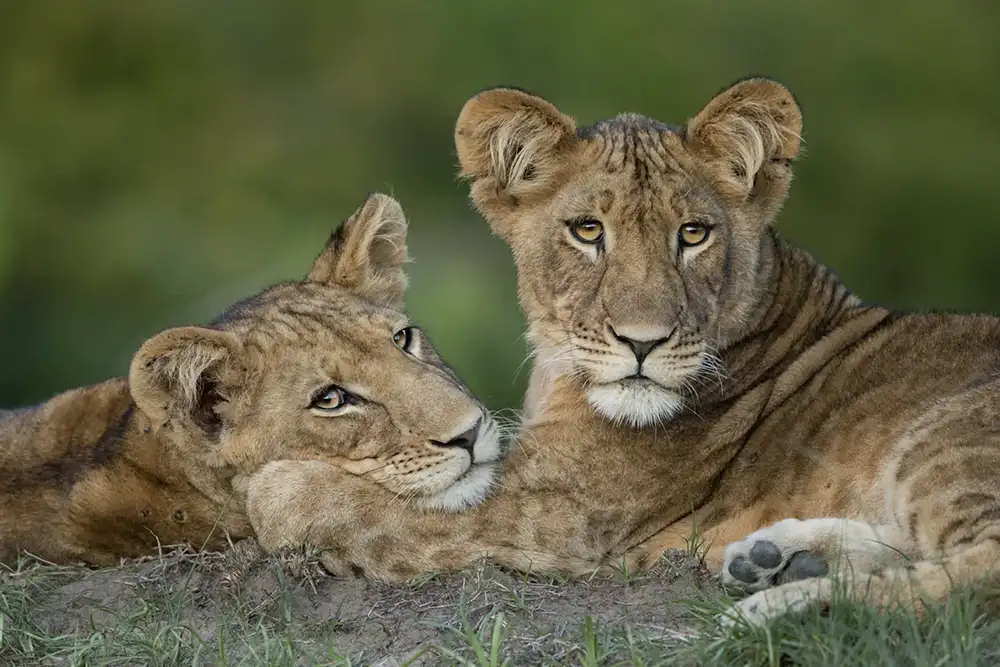
Founded in the 1950s by the legendary conservationist Norman Carr, Kafue is Zambia’s oldest national park. Covering approximately 22,400 square kilometres — an area comparable to the size of Wales or Massachusetts — it’s also the country’s biggest, ranking among the largest parks in all of Africa. The landscape transitions from miombo woodland and granite outcrops in the south to sweeping grasslands and wetlands in the north, especially the renowned Busanga Plains.
The characteristic Kafue landscape of dense miombo woodlands and seasonal floodplains, called dambos, attracts a mosaic of wildlife, from elephants and cheetah to waterbuck and zebra. It’s an important ecosystem for Zambia’s protected cheetahs, which hunt in the dry grasses of the famous Busanga Plains, often likened to a “mini Okavango Delta”.
Kafue has fewer animals than South Luangwa, but is rather known for its incredible diversity of species. It’s home to more than 150 species of mammals, including elephants, lions (sometimes seen in trees), cheetahs, leopards (notably visible at night), wild dogs, hippos, crocodiles, buffalo, zebra and the highest diversity of antelope species in Africa — 21 species, including roan, sable, lechwe, kudu and many more. The park also contains rarer species such as pangolin, aardvark, honey badger and two types of baboon. Over 500 bird species have been recorded, making it a premier birding destination with species like the wattled crane, Pel’s fishing owl, African fin-foot and the black-cheeked lovebird.
The park is one of Africa’s best-kept safari secrets, ideal for those seeking adventure off the beaten path. Despite its vastness and unique wildlife, Kafue National Park receives far fewer visitors than Luangwa and Lower Zambezi. Its seclusion offers a remote and unspoiled safari experience, and the possible activities include game drives, walking safaris, boat trips, birding, canoeing and fishing.
Kafue is a core part of the Kavango-Zambezi Transfrontier Conservation Area (KAZA), the world’s largest transboundary conservation area. The park has faced challenges from poaching, resource harvesting and encroachment, but recent management improvements have led to increased protection and wildlife recovery.
Highlights of Kafue National Park:
- It’s the best place in Zambia to see cheetahs.
- The Busanga Plains in the north are a wildlife hotspot, especially during the dry season when the area becomes a hub for predators, prey, and birdlife.
- Kafue is the only place in Zambia that offers hot air balloon rides, a special experience for undisturbed game viewing.
- You won’t see other tourists while you’re there. It’s Zambia’s largest park and has the fewest lodges, meaning you and your campmates will have your area all to yourself.
See Victoria Falls, Zambia’s Natural Wonder of the World
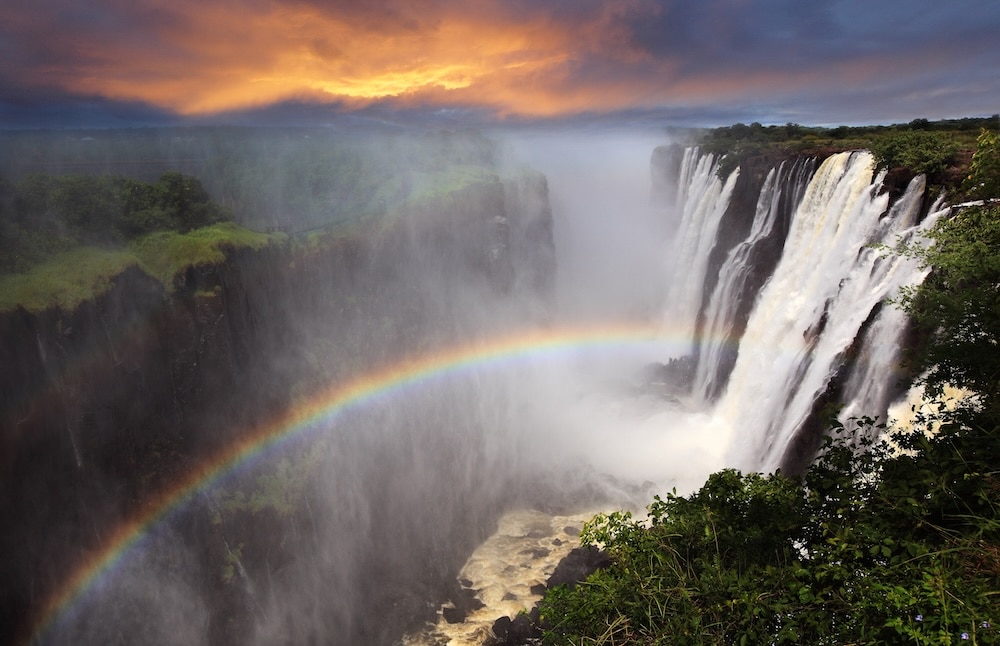
Double the height of Niagara Falls and one of only seven natural wonders of the world, Victoria Falls is a highlight for a reason. Victoria Falls is a majestic natural wonder notable for its immense size, powerful flow, geological significance, rich cultural history and unique environmental features, making it one of Africa’s — and the world’s — most iconic landmarks.
The massive waterfall is nearly two kilometres wide and seemingly endlessly deep. The powerful water cascading into the hundred-metre gorge creates a thunderous roar that gives the Falls its local name: “Musi-O-Tunya,” meaning “the smoke that thunders”. At peak flood (usually around April), about 500 to 700 million liters of water per minute cascade over the edge, producing an enormous spray that can rise to 500 meters (1,650 feet) into the air. The spray from the falls creates a rainforest ecosystem on the Zambian side, where it rains almost daily. At night during a full moon, a rare “moonbow” or lunar rainbow can be seen in the mist, adding to the falls’ mystical allure.
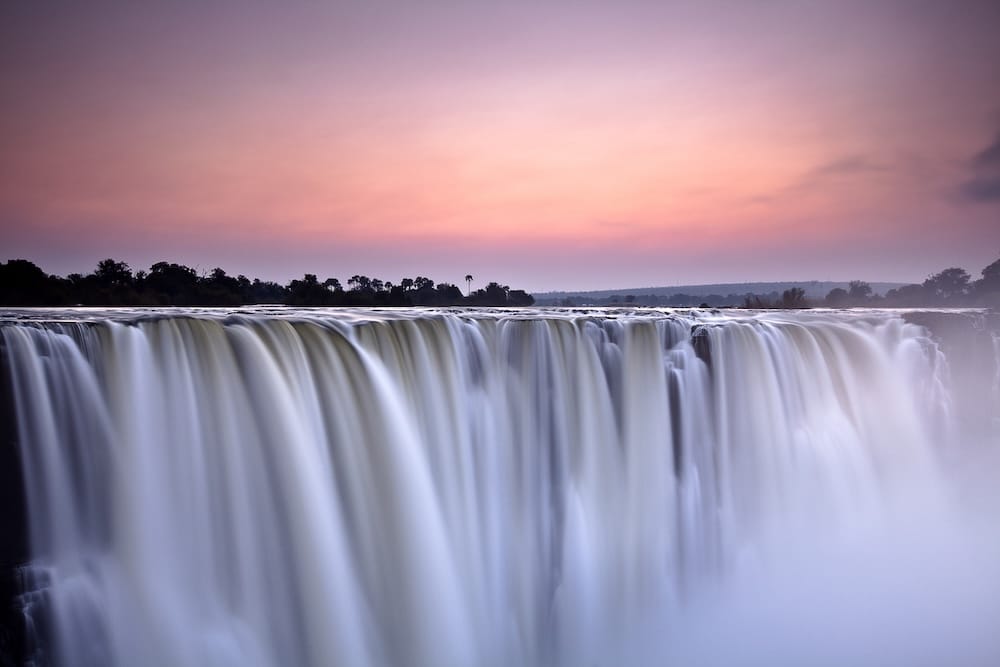
There are endless ways to experience this UNESCO World Heritage site, whether from above or below. You can submerge in the natural pools atop the falls or hang onto the precipice at the Devil’s Pool. Easygoing pontoon boats cruise the calm waters above, while below, in the gorge, jet boats crash through the turbulent waters. Some of the best views of Victoria Falls are from the Knife Edge suspension bridge, where you’re drenched in the spray thrown up by the water plummeting over the shelf.
Best things to do near Victoria Falls:
- Visit the Elephant Cafe for a five-star organic farm-to-table dining experience among the elephants in the sanctuary.
- Visit the Devil’s Pool for a spine-tingling view at the edge of the falls.
- See the rare white rhino on a guided walk through the Mosi-oa-Tunya National Park. It’s the only place in Zambia to see the white rhino, which is the focus of a conservation project decades in the making. The Park’s rhinos are guarded 24/7 to protect them from poachers.
Zambia Travel tips, Victoria Falls:
- The best time to visit for viewing the falls at their fullest is during the high-water season from February to July, while drier months are ideal for adventure activities.
- Since Victoria Falls is on the border of Zambia and Zimbabwe, many visitors like to cross to the other side for a different view of the scenery. Plan ahead by getting the Kaza Uni-Visa, which allows multiple entries to both countries, in addition to permitting day trips to Botswana via Kazungula.
Travel guide to Zambia’s capital city: Experience Zambia’s modern urban culture in Lusaka
Zambia’s capital city Lusaka is the principal entry point into the country. It’s one of Africa’s fastest-developing cities, a bustling commerce center of shopping malls, business towers and sidewalk sellers. Yet, the rapidly modernizing city maintains its authentic roots, with locals still shopping for daily wares at the expansive Lusaka City Market. The city also has a thriving arts and culture scene. Popular spots include the Lusaka National Museum, which tells the story of Zambia’s past from prehistoric times to the post-colonial era, and Kabwata Cultural Village, where local artisans sell and share traditional Zambian crafts, performing arts and cuisine with visitors. Smaller art galleries are interspersed throughout the city, alongside gem boutiques selling Zambia’s famous gems, especially emeralds.
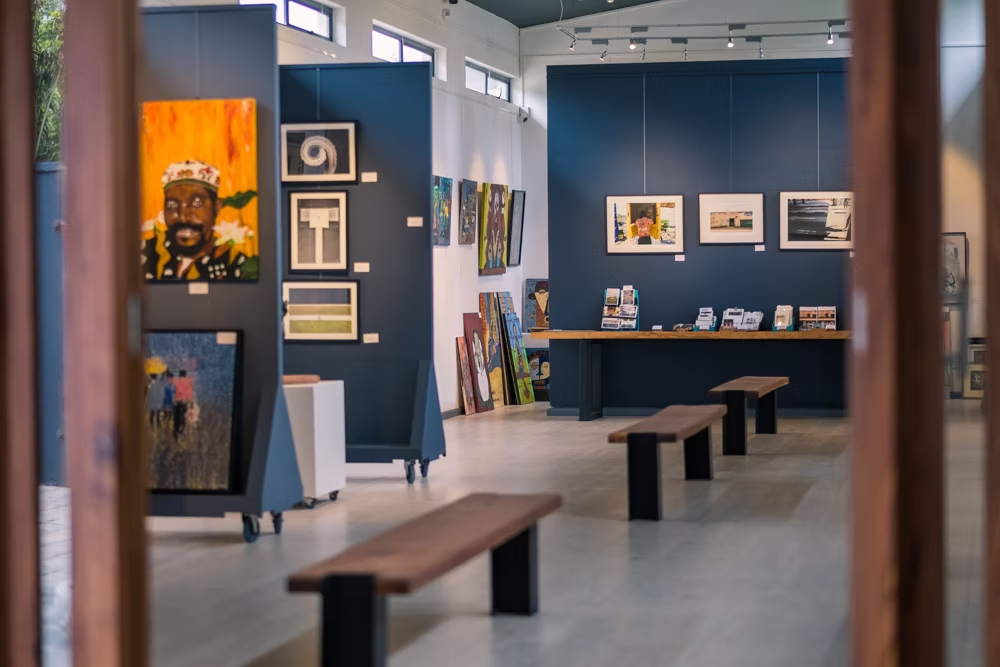
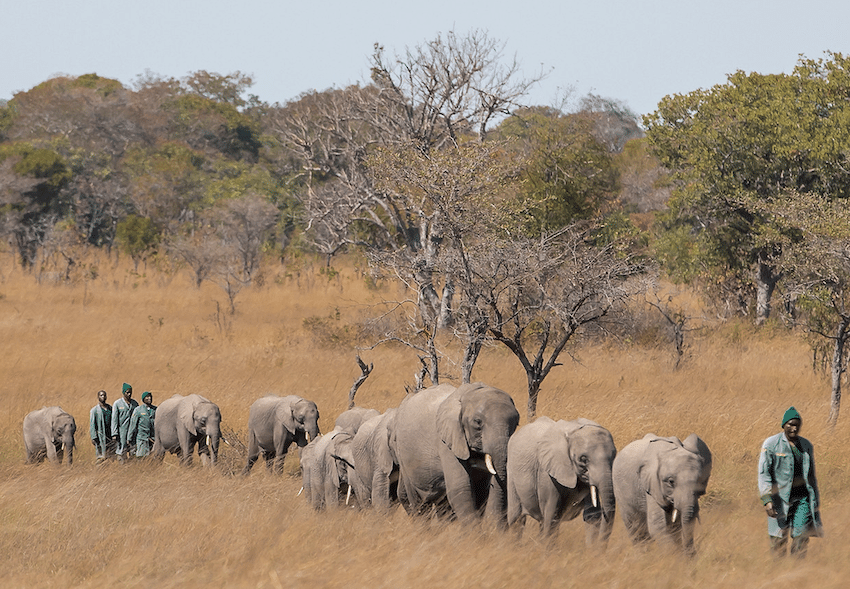
To truly understand Zambia and have a more in-depth experience of this varied country, karibu adventures recommends a few days’ stop in Lusaka. Karibu can arrange a number of varied experiences, from visiting a boutique art gallery and gem shop showcasing up-and-coming Zambian artists to visiting an elephant orphanage just outside the sprawling city.
Special experiences in Zambia’s capital city:
- Visit an elephant orphanage and help prepare their meals.
- Take a walking tour of a local neighbourhood
- Visit the gem shop and boutique art gallery, 37d.
Zambia travel tips, Lusaka:
- Taxis in Lusaka don’t use meters, so you might find it easier to get around the city using local ride-hailing apps, like Ulendo or Yango.
Zambia Travel Tips: Practical Info
When to visit Zambia
The dry season is May to October. The dry season is marked by cooler temperatures; daytime temperatures range from 20°C to 25°C (68°F to 77°F) with cooler nights. Mid-June to the end of August tends to be the coolest period. You can expect lower humidity and clearer skies during the dry season.
The wet season is from November to April. You can expect heavy rainfall with daily thunderstorms, especially from December to the end of February. Daytime temperatures range from 25°C to 30°C with high humidity.
The best months to go on a safari to Zambia are from early June to mid-October. The dry season is ideal for wildlife viewing, as animals concentrate around water sources, making sightings more predictable and abundant. In June, the parks are still green from the rainy season, the nights are chilly, and the days are sunny and cool. By September, the days and nights are significantly warmer, the parks are drier, and the animals in Zambia congregate around watering holes, lagoons and rivers, so game viewing is optimal.
If you want to experience Victoria Falls, it’s best to visit from August to December, when water levels are low. It’s ideal for swimming in the pools on the waterfalls’ edge and rafting through the river below.
There are also good reasons to visit Zambia during the “Emerald” wet season, named for the rejuvenated green foliage and the country’s famed emerald gems. The wet season is popular among bird enthusiasts; you can see hundreds of species of migratory birds and the breeding of resident species. There are also fewer visitors in the country during the wet season. However, some roads and camps become inaccessible due to rainfall.
How many days do you need for a safari in Zambia?
Longer journeys of up to 15 days are common, as they’re better for getting a full view of the country. On a 12-day safari, you can see South Luangwa National Park, Lower Zambezi National Park and Victoria Falls. We recommend at least four nights in each park you’d like to visit and two nights in Victoria Falls. If you want to explore the country’s urban culture in Zambia’s capital city of Lusaka, factor in an additional couple of days.
Is it safe?
In addition, we have close family connections to the owners of many of the camps we recommend and support staff in the capital of Lusaka who are available 24/7 to assist with any issues that may arise.