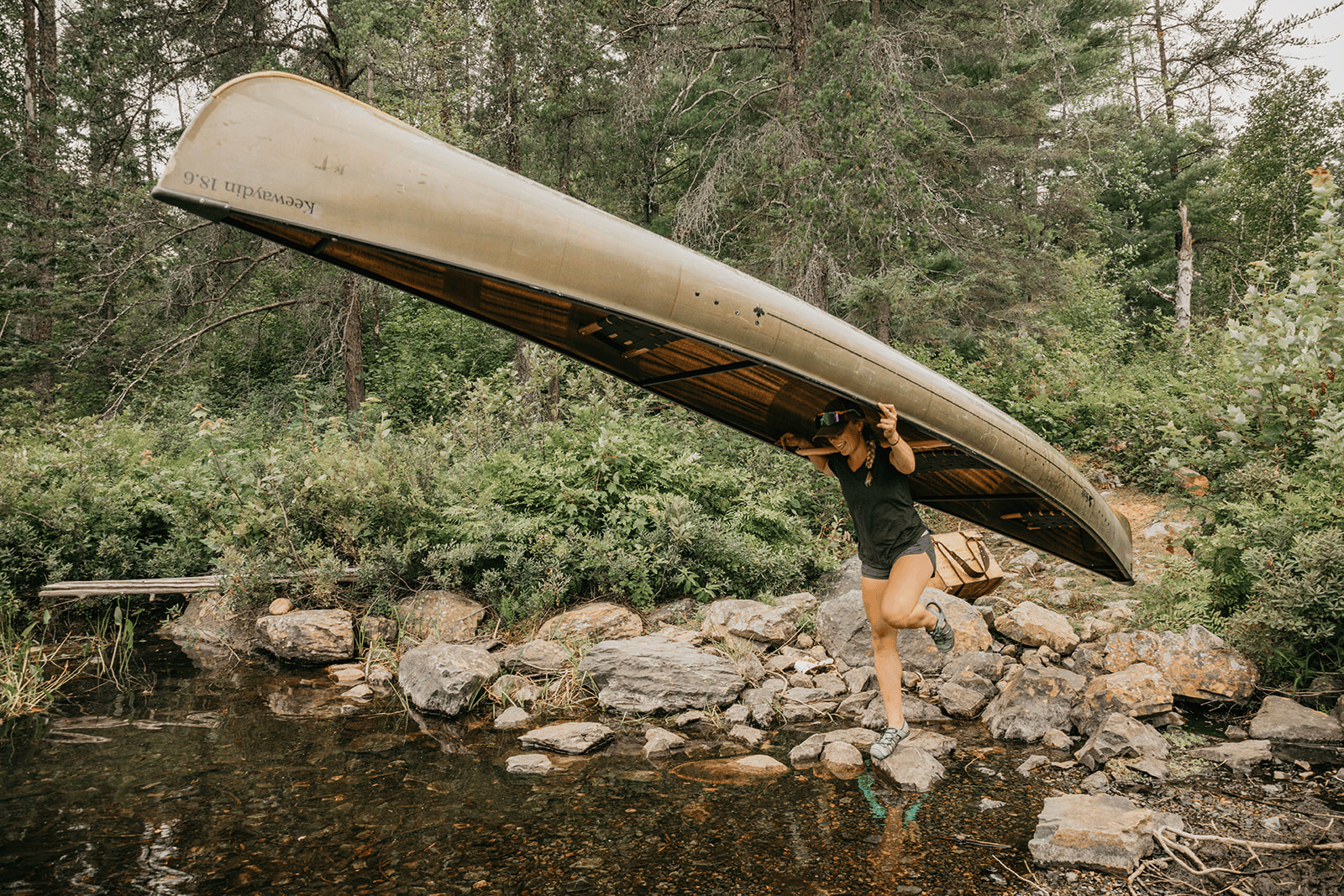
Canada is so, so, so much more than Niagara Falls. The best places to visit in Canada during summer span this vast country, from Vancouver Island on the west coast to Newfoundland at the easternmost edge of North America. Just a bit off the beaten track from the usual places, you can explore pristine wilderness practically to yourself. With natural beauty and untrampled, wild nature, Canada has it all: hiking, beaches, canoeing, kayaking, fishing, great restaurants, culture, and much more.
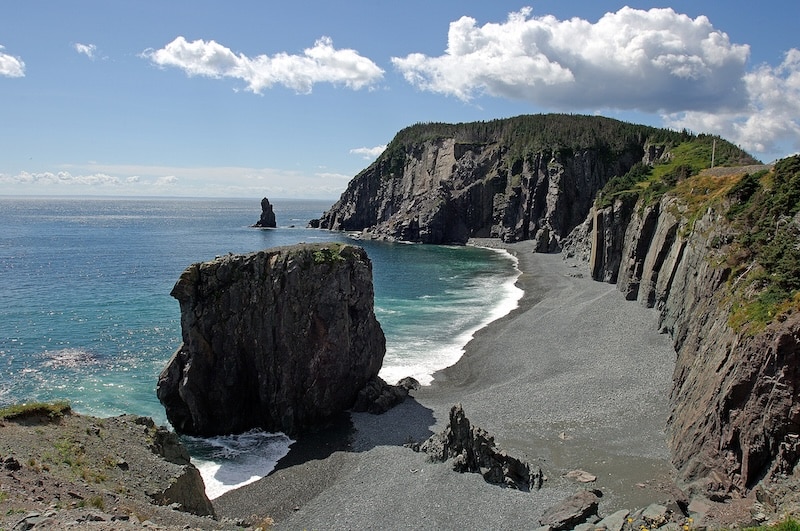
Places to visit in Canada in summer range from the backcountry Canadian Shield to surprising destinations, like this black sand beach in Newfoundland.
A country of countless hidden gems, Canada has tons of options for outdoor adventure without the crowds. In contrast to much of the rest of the world, which is experiencing ruinous over-tourism, Canada remains much less travelled. It’s a place where you can still explore pristine getaways and truly disconnect. In today’s world, where 80% of travellers visit just 10% of the world’s destinations, that feeling is travel gold.
Have a true Canadiana summer with our world-class and uniquely Canadian experiences, whether it’s a canoe trip through old-growth forests in Ontario, a sea kayaking adventure with orca whales in British Columbia, or hiking in Newfoundland along the continent’s edge. To help you choose, we’ve put together a month-by-month calendar highlighting the best times to visit each destination.
Visit Newfoundland in late June and July

One of the hikes along the picturesque East Coast Trail on Newfoundland’s southern shore.
Newfoundland and Labrador is a “bucket list” destination for many, yet visited by few, perhaps because of its remote location at the farthest edge of North America. Facing the harsh weather and vast expanse of the North Atlantic, Newfoundland has rugged beauty. Its beautiful craggy coast is home to unique nature, preserved by its isolation. An infectious community spirit complements the wild natural beauty. The province’s warm and welcoming culture, infused with music and humour, feels removed from today’s fast-paced world.
Hike Newfoundland’s East Coast Trail

The Berry Head Arch, an iconic landmark along Newfoundland’s East Coast Trail.
While hiking Gros Morne National Park is very popular these days, Newfoundland’s East Coast Trail is a hidden gem with incredible coastal hiking and few people. Spanning 336 kilometres, the East Coast Trail includes six of North America’s most scenic hikes. The ECT, as it’s known, is suitable for both beginners and advanced hikers. There are a variety of hiking routes on the East Coast Trail, from short, 1-to-2-hour hikes like Skerwink Trail to day-long hikes like Flambers Head and Spout Path.
See puffins and whales in Newfoundland
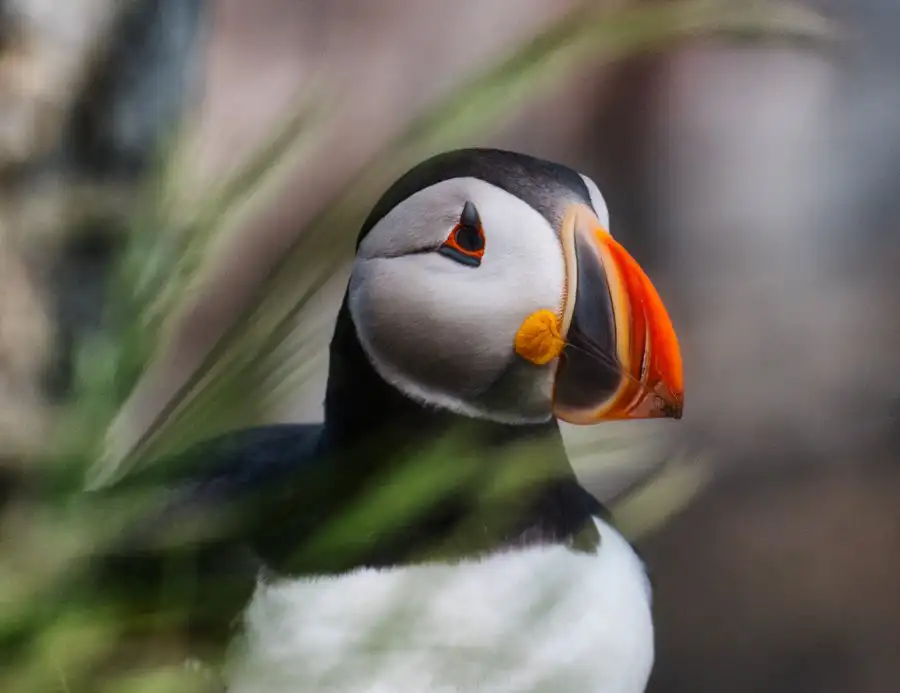
On the southern shore of Newfoundland, Witless Bay is home to North America’s largest Atlantic Puffin colony.
This area has an amazing array of sealife and is particularly popular for spotting puffins and a variety of whales, including humpback, minke, fin, sperm, and orcas. During summer, the world’s largest population of humpback whales migrates from the Caribbean to feed in Newfoundland and Labrador. You’re likely to see them near Bay Bulls and the Witless Bay Ecological Reserve. The nature reserve, just south of the provincial capital of St. John’s, also offers incredible access to seabirds. The reserve consists of four seabird colonies, which breed on four islands in the surrounding waters. Here you’ll find North America’s largest Atlantic Puffin colony and the world’s second-largest colony of Leach’s Storm Petrel seabirds.
Visit quaint, colourful fishing villages
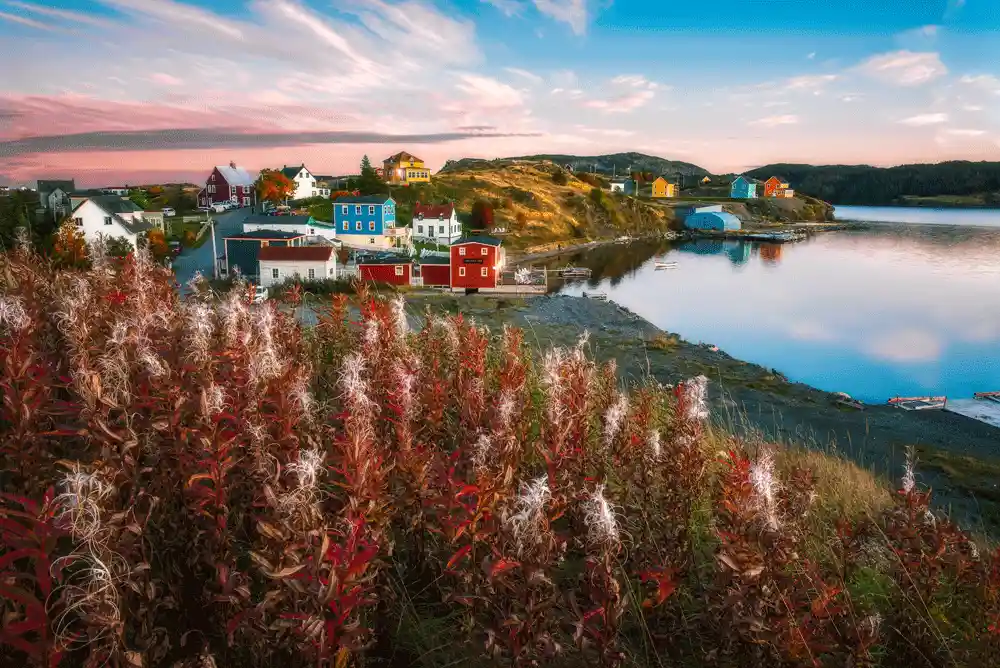
Bonavista’s rich cultural heritage — especially the preserved architecture in Trinity — is a highlight in Newfoundland.
The scenic Bonavista Peninsula, northwest of the St. John’s area, is known for its historic fishing villages along the wild, craggy coastline. A main highlight of the area is the Town of Trinity — a classic Newfoundland fishing village with colourful clapboard houses. The town began as a fishing community and evolved into an important centre for trade in the province. Its natural headland, Fort Point, also made it a defensive location against the French and American privateers. Today, many structures have been preserved to show the architectural and cultural heritage of the area.
Why is Newfoundland the best place to travel in Canada in July?
karibu adventures runs its small group 8-day hiking tour of Newfoundland in late June and July because it has the best combination of weather, whales and fewer people. July is warm, and it generally rains less than in other months. The weather warms up a bit more in August, but the area gets very busy with tourists; we stick to late June and July to avoid the crowds.
Most importantly, July is the best time to see whales in Newfoundland. In fact, it’s one of the best months for seeing Newfoundland’s wildlife in general. During this time, small, herring-like fish called capelin come in to spawn, which brings the whales in addition to puffins and other seabirds. Puffins are also typically present on their nesting sites along the coast during July, offering fantastic birdwatching opportunities.
Go to Vancouver Island in August
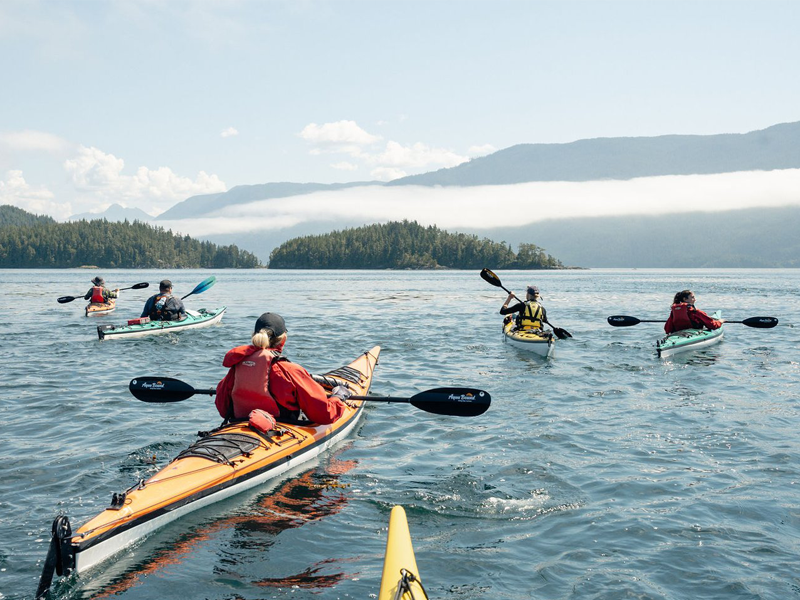
Kayaking the Broughton Archipelago off the northeast coast of Vancouver Island.
On the west coast of Canada, nestled into the nook where British Columbia meets Washington State, is Vancouver Island. It has giant, ancient forests, mountainscapes, rich wildlife, and important history and Indigenous culture. This diverse island is one of the best places to visit in Canada in summer. There are countless things to do on Vancouver Island, whether hiking the West Coast Trail, surfing in Tofino or exploring the historic harbour city of Victoria. But those in the know head north to see Vancouver Island’s hidden gem: unparalleled views of orca whales, and an incredible array of wildlife.
Kayak among whales off North Vancouver Island
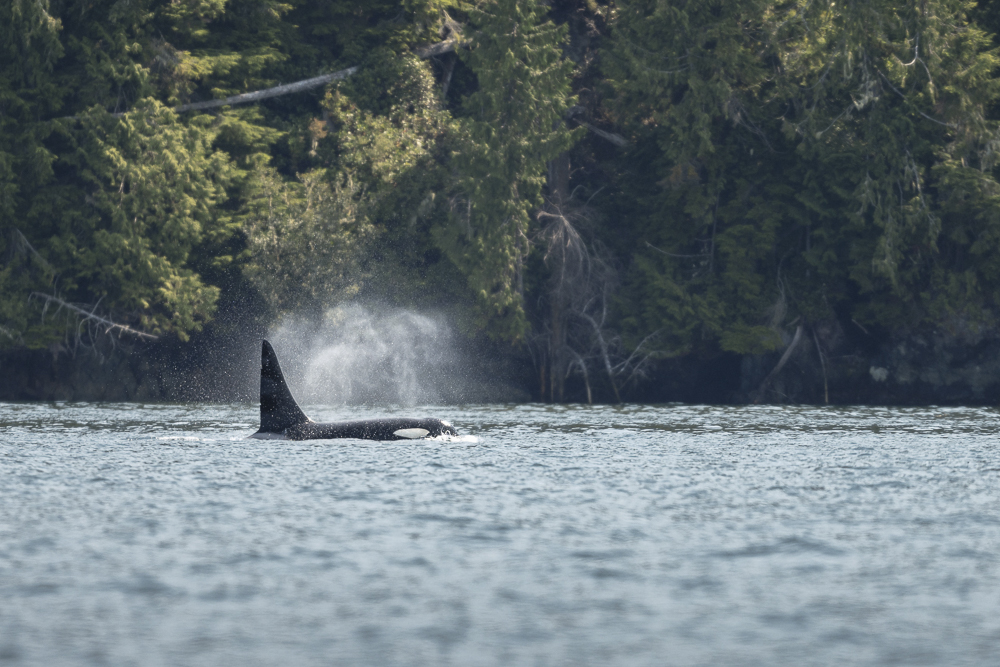
The waters of north Vancouver Island are teeming with wildlife, especially killer whales, best seen from late July to September, when they come to feed on salmon.
Vancouver Island has some of the world’s most wildlife-rich waters, particularly around the Johnstone Strait off the island’s northeast coast. It’s a marine mammal superhighway, connecting the 200-plus islands of the Broughton Archipelago to the north and the mainland’s Coastal Mountains to the east. It easily boasts the greatest concentration of animal life anywhere in British Columbia. The Johnstone Strait is world-renowned as one of the best places to see orca whales, especially in late July, August and September. The area even has a famous orca sanctuary, located in the Robson Bight-Michael Bigg Ecological Reserve, where orcas famously come to rub along the smooth stones in the Strait. You will likely find yourself kayaking with killer whales in these parts, not to mention humpback whales, dolphins and Steller sea lions.
Surf in Tofino, for beginners and pros

There are countless spots to catch a wave on the Tofino peninsula, such as the stunning Cox Bay (pictured).
Tofino, dubbed Canada’s “surfing capital,” is one of the best places to visit in Canada for families — there are calm spots to learn how to surf, advanced waves for experienced surfers, and sandy beaches for non-surfers. It’s the best swimming locale on Vancouver Island’s west coast, with countless beaches and little nooks to get lost in. Tofino is in the traditional territory of the Tla-o-qui-aht First Nation within what we today call the Clayoquot Sound. Recognized as a UNESCO Biosphere Region, this hippie town is located at the entrance to the Pacific Rim National Park, known for great hiking trails through old-growth forests.
Relax on sandy beaches
It’s not hard to find a beautiful sandy beach on Vancouver Island’s 3,400-kilometre coastline. Long Beach, the grandest stretch of sand on the island’s west coast, is a well-known gem. MacKenzie Beach draws families with its gentle surf for little ones and a treasure trove of shells and vibrant tidal pools exposed at low tide. Families also love Qualicum Beach on the island’s eastern shore for its vast stretches of white sand.
Why is Vancouver Island the best place to visit in Canada in August?
We run the karibu adventures North Vancouver Island tours in late July and August because it’s the best time of year to see orca whales. Late summer — generally late July, August and September — is when the migrant orca populations, known as Bigg’s orcas, come through the Johnstone Strait to feed. Their population, in addition to the Northern Resident orca population of British Columbia, increases your chances of spotting killer whales. Plus, humpback whales are plentiful and can be seen either resting on the surface or feeding on giant balls of plankton during this high season.
Experience the backcountry of Ontario in August or September
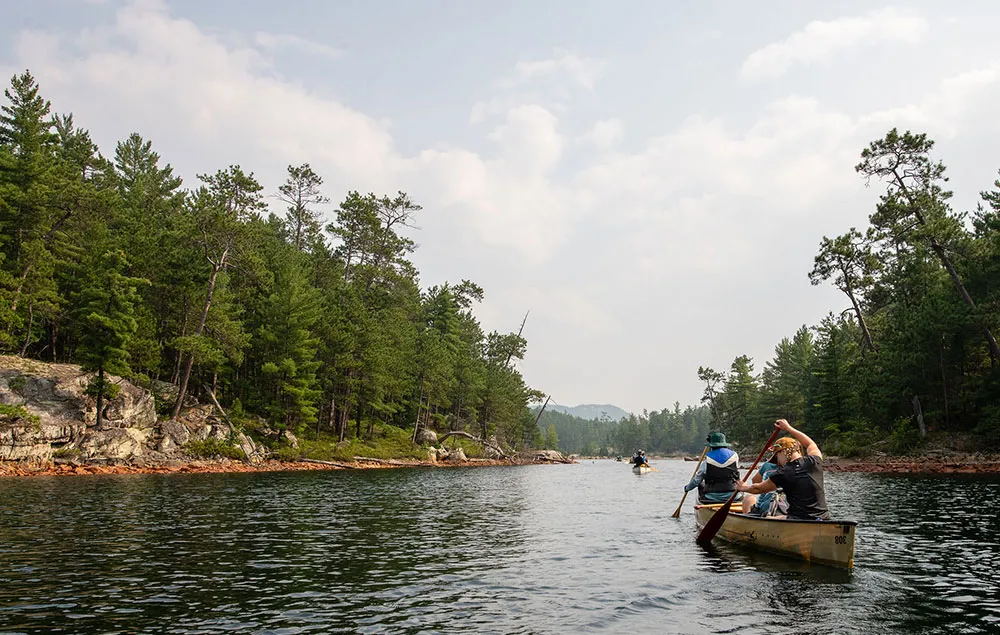
If you’re looking for an unparalleled Canadian Shield canoe trip, you can’t beat Temagami.
The wild Canadian backcountry was divinely designed for summer canoe trips. Canoeing the Canadian Shield — the greatest area of exposed Archean rock in the world — is an iconic and uniquely Canadian experience you can’t find anywhere else. When it comes to canoe trips in Ontario, Algonquin Park near Toronto first comes to mind. But if you are looking for real backcountry that you can easily access, Temagami is hands down the best place in Ontario to canoe.
The Temagami Wilderness is a vast 12,000 sq km area of mostly wild, unmanaged land in northeastern Ontario. A favourite among backcountry canoeists, the Temagami boasts nearly 5,000 km of paddling routes. This hidden gem is a spectacular wilderness while still being accessible.
The best part? There are no crowds.
Paddle deep, clear lakes

Temagami canoe country offers up to 4,700 km (more than 2900 mi) of routes — triple that of the more popular nearby Algonquin Park.
With whitewater and flatwater paddling, ten rivers and hundreds of lakes, Temagami is truly a dream canoe trip destination. The namesake lake of the Temagami River Provincial Park is a vast expanse of deep, clear waters. You can stop for a swim at the sandy inlet on Lake Temagami’s Ferguson Bay. Another large lake in Temagami, the Matamagasi, is best known for its ancient Indigenous pictographs painted onto the rock face.
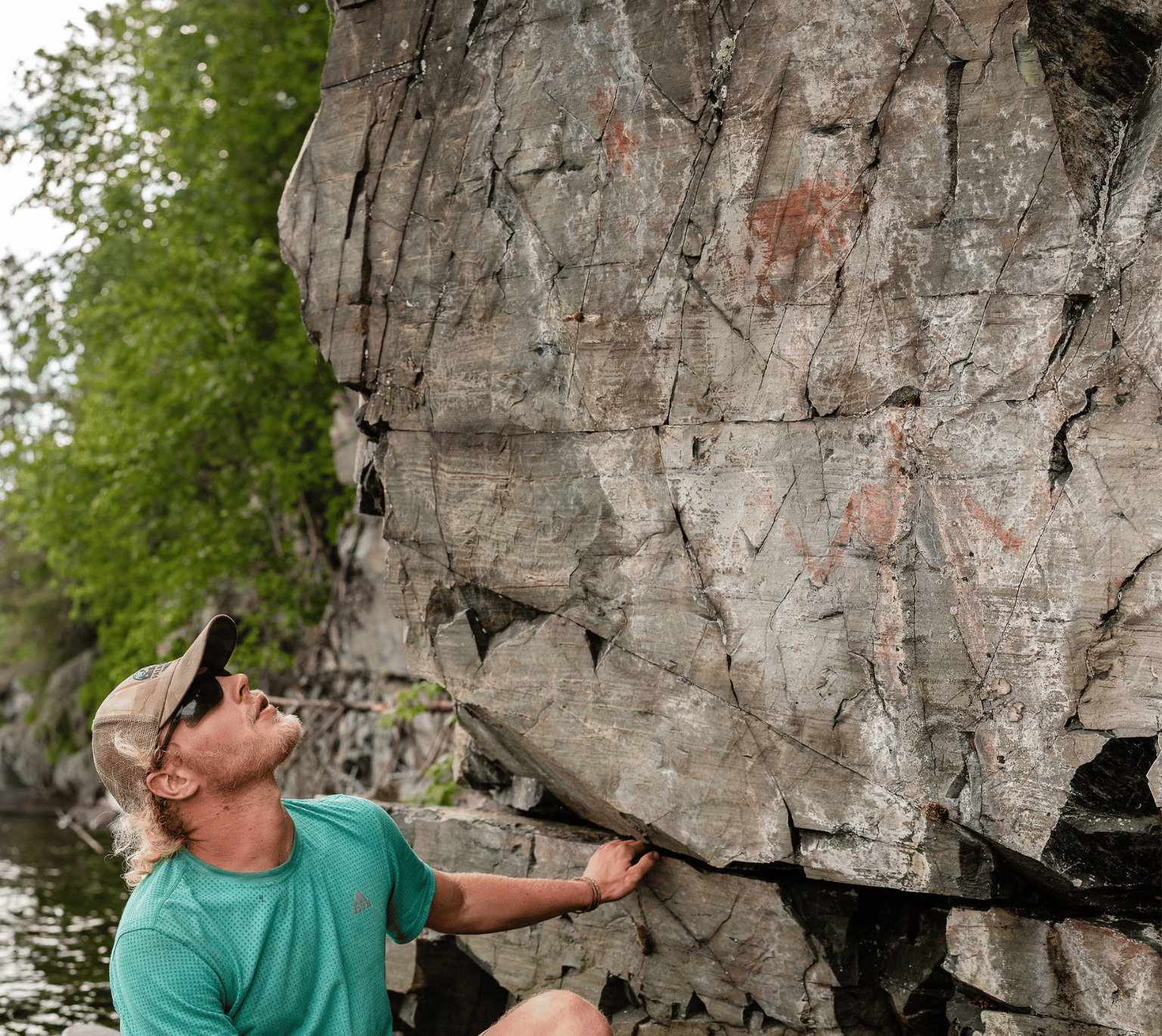
Ancient Indigenous pictographs can be found along the waterline of Matagamasi Lake.
One of the gems of the Temagami wilderness is Wolf Lake, and for good reason. Its crystalline water is ringed by white granite, quartzite cliffs and towering old-growth red pines. Nearby is the best swimming hole in Temagami. Jumping into the clear blue-green water over the gushing 30-foot waterfall is a refreshing stop on a canoeing journey through the Chiniguchi Waterway.
See ancient old-growth forests

Paddling along the white quartzite cliffs of Wolf Lake in Temagami, Ontario.
One of the most beautiful aspects of Temagami is its old-growth red and white pine forest. The majestic pines surrounding the quartzite-rimmed Wolf Lake constitute the largest remaining contiguous old-growth red pine forest in North America. The ancient red pine is critically endangered; only 1.2% of the world’s old-growth red pine forests remain today. Nearly half of all types of old-growth pines are found in Temagami. The protection of Wolf Lake and its rare forest is fiercely advocated for by conservation groups, namely Save Wolf Lake.
Why is it the best place to go in Canada in August and September?
The biggest consideration when planning a backcountry trip is the insects. We take our guided small group canoeing trips to Temagami in August and September because the bugs are gone by late July. And while the days can be pretty warm, hovering between 20–25C (68–77F), the cool nights (about 13C/55F) are perfect for hanging out and roasting marshmallows around a fire.